
The embroidered front of a barong Tagalog gives you a precise place to begin a conversation with its maker. Compare the outline and density of two panels, then describe where you would like the work to appear on yours.
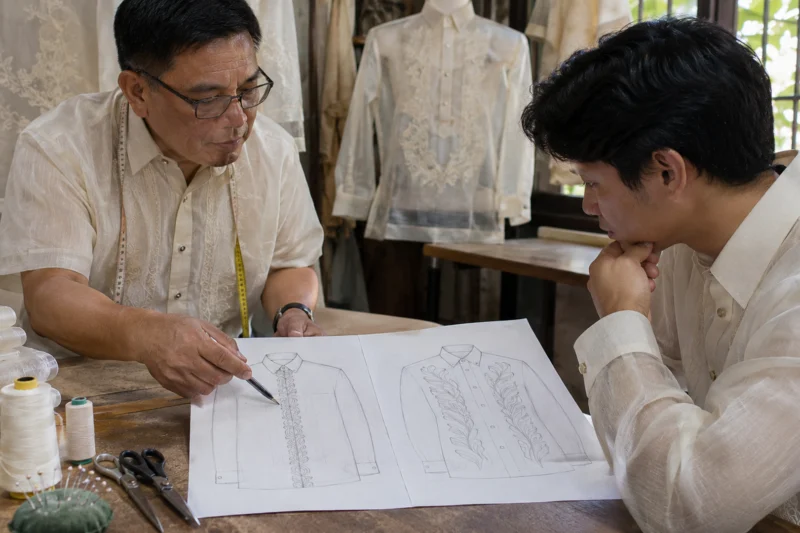
Trace a garment’s use through the people who make or wear it. The barong embroidery guide starts with the wearer’s occasion and the maker’s own vocabulary.
The embroidered front of a barong Tagalog gives you a precise place to begin a conversation with its maker. Compare the outline and density of two panels, then describe where you would like the work to appear on yours.
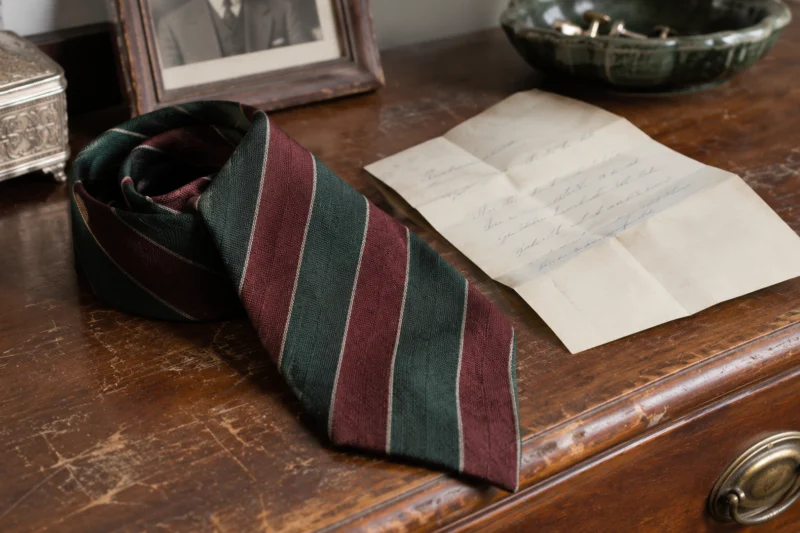
A striped tie and a handwritten family note tell you where to start looking. Find the organisation’s own description, see who its design represents and decide whether wearing this particular tie would tell the story you intend.

Finding a grandfather’s medal case can bring up a surprisingly practical question before November 11. Check the Canadian guidance, identify the recipient and decide how to acknowledge the medals and the person who earned them at your local observance.

The same tartan can produce two quite different backs on a kilt. See what changes when a maker follows the sett or picks out a stripe, and ask for a folded sample before you settle on the design.
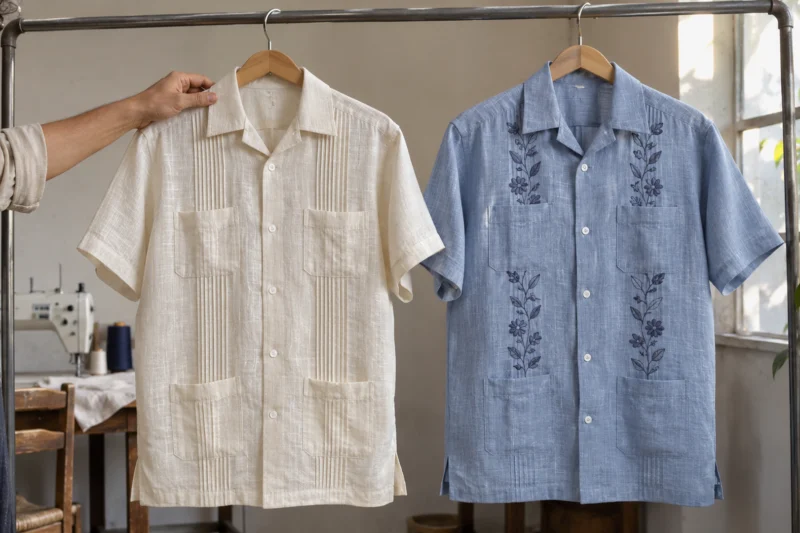
The lines down a guayabera can be folds in the cloth, embroidery or a combination the maker has developed. Follow one row from chest to pocket, then compare it with another shirt to discover which treatment you enjoy.