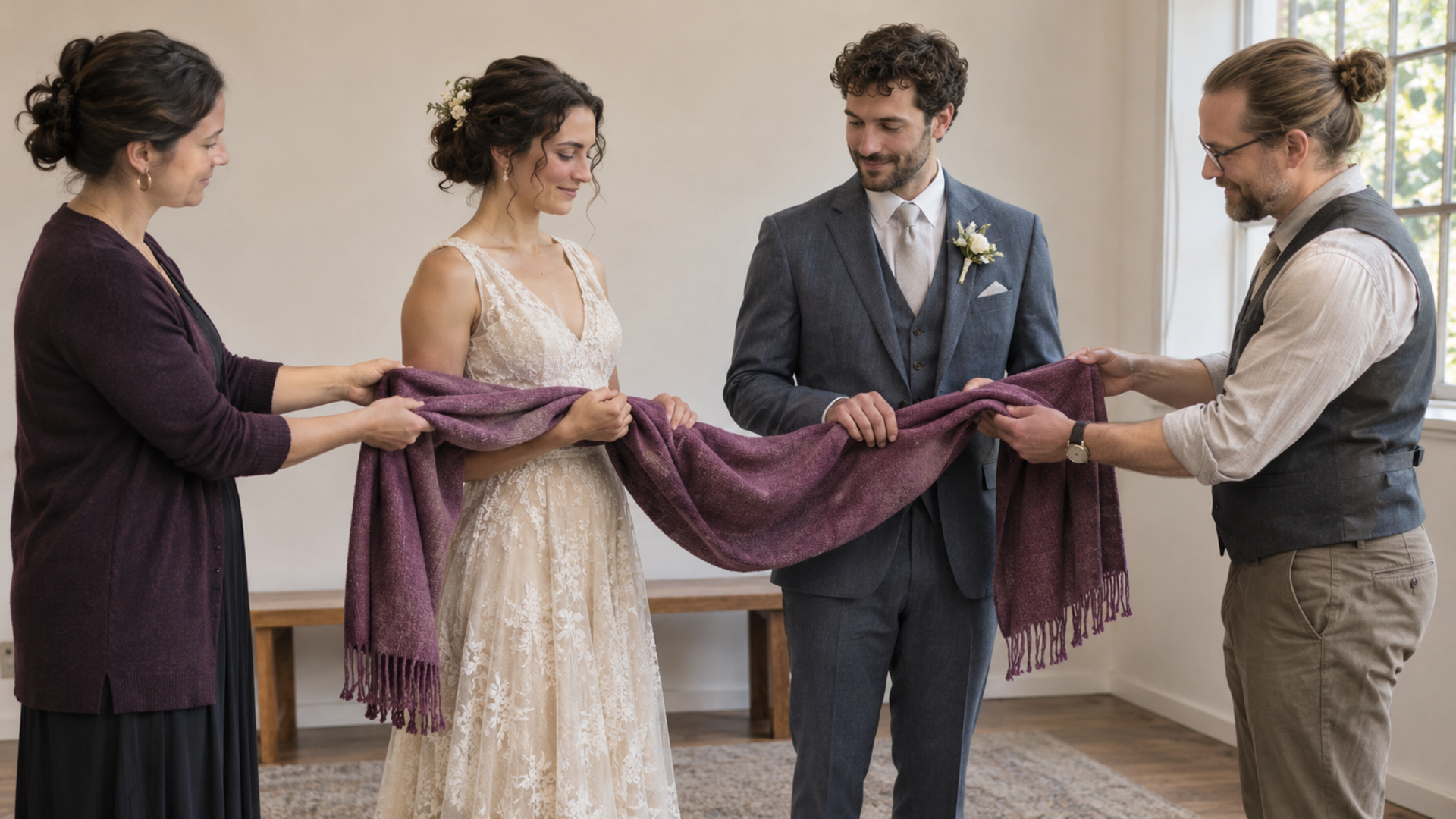
Start with the two people getting married. Ask which garment, if any, they want to put on, share or return during the rite, and who can speak to its meaning. Then ask each participating officiant and family member about the actual sequence. Give every handoff a cue, a named handler, a destination and a backup the people involved have approved. Rehearse the movements with a stand-in before bringing out a valued textile.
Featured image generated with AI.
A wedding running order often says when a reading begins and who carries the flowers. “Garment ceremony” on a line of its own leaves several people guessing. Someone must have the garment when the cue comes. Someone must know which way it opens. Someone must still be responsible for it when the couple’s attention moves to the next part of the ceremony. Write the card for those people.
Ask each partner what belongs in this ceremony
Invite each partner to describe the moment in their own words. One may have watched a similar rite many times. The other may be encountering it for the first time or may want a different family practice to have its own space. Write down what each person wants included, what is still under discussion and who they trust to explain it. Agreement on the garment’s name is a good place to start.
Speak to the relevant officiant and participating family member about this particular ceremony. Ask who may handle the garment, whether a substitute can be used in rehearsal, where it may rest and whether there is any part of the process that should stay private. A relative’s account of their own wedding is a valuable memory. Give it the status that the current participants assign it before turning it into an instruction for your day.
There are many ways to build a ceremony. For example, the Humanist Association of Ireland describes working with a celebrant and including symbolic rituals in personal wedding ceremonies. That description concerns the ceremonies it conducts. It does not prescribe a garment or a sequence for an interfaith or family rite. The people responsible for your ceremony supply the meaningful words and actions. Humanist Association of Ireland’s wedding overview
Trace the garment before the first cue
Start at the point where the garment arrives. Who brings it, who receives it and where can they put it? If it arrives in a case or wrapping, ask who opens it and where the empty wrapping goes. A helper cannot quietly return a garment to a case that someone has already carried away. Use people’s names and the locations they will recognise when the room is full.

Walk from the starting place to the couple’s position. Open the relevant door and check whether a reader, musician or family group will occupy the route. A table that appears close on an empty floor plan may be behind several occupied seats during the ceremony. Ask the venue contact which surface can be kept clear. If the garment needs to stay with a person, replace the proposed table on the card with the named custodian.
Ask how the garment should be prepared for the handoff. The family may want it folded a particular way, left in its covering or opened by a specific person. If the original is delicate, agree with its owner about any handling rehearsal. The guide to wearing a fragile heirloom jacket can help with the separate decision about whether a valued garment can take part at all.
Give the cue to a person who can see or hear it
Choose a cue that actually happens in the room. A specific phrase spoken by the officiant, the end of a reading or a direct nod from a named person can all work if everyone agrees. A printed time alone is easily missed when a reading runs long. Ask the handler to stand at the proposed place and check whether the cue will be audible or visible from there.
Describe the next movement from the handler’s point of view. “On the last line of the reading, Jo lifts the folded textile from the side table and offers it to Ari” gives Jo a starting point and an endpoint. Ask Ari what they expect their hands to be doing at that moment. They may already be holding a book, a microphone, a partner’s hand or another item with its own instructions.

If the same person also manages rings or another small object, put both actions on the running order and look at the interval between them. A ring handoff when the outfit has no pockets deserves its own named holder. The cloth helper should not acquire another responsibility by default simply because they happen to be standing close to the couple.
Rehearse one shared textile
Consider an invented rehearsal with a plain plum practice wrap. The couple want a moment together under the textile. They have asked two helpers to practise the movements and have agreed that the real garment will be used only after the family has confirmed the arrangement. Nothing about the wrap establishes a tradition or tells another couple what it ought to do. It is an easy object with which to test the route.
At the agreed words, the first helper lifts the folded wrap and presents its accessible edge to the second. The second checks that the couple are in position before opening it as rehearsed. The couple decide whether it is comfortable to share the textile standing, seated or side by side in another arrangement. The officiant can see whether a pause is needed before continuing. Run this part in silence once so the movements can be observed, then repeat it with the real cues.
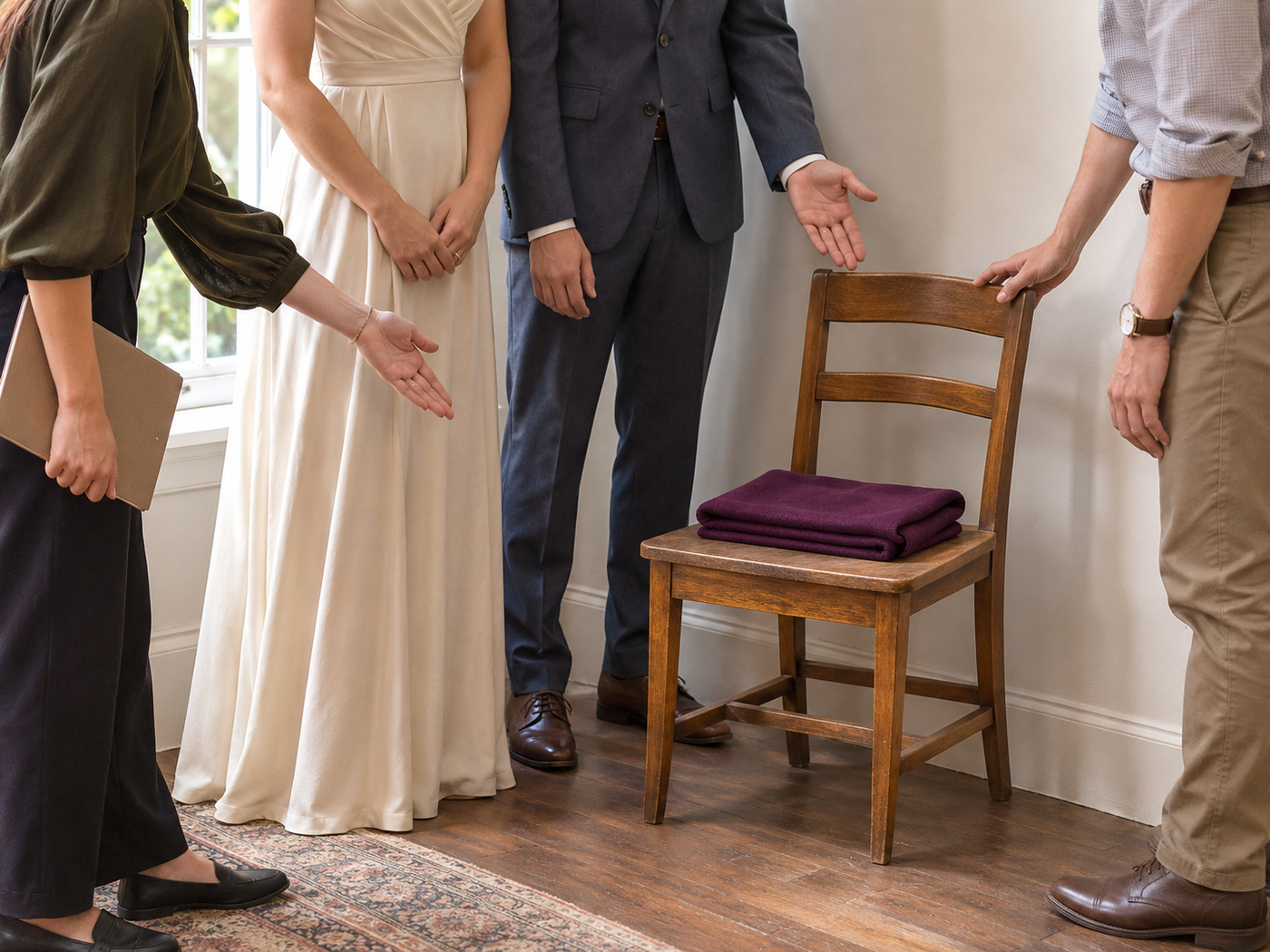
Now rehearse the return. A helper receives the wrap, gathers it in the agreed manner and takes it to the approved resting place. Another named person takes custody after the ceremony. Identify the point at which each helper’s responsibility ends. A garment that remains on an ordinary chair after the room begins to empty still needs someone who knows it is there.
Plan for a missed cue without adding pressure
Ask the officiant where the sequence can pause comfortably. If the first helper misses the cue, the officiant might wait for a discreet signal before proceeding. If a person is absent, only the backup whom the couple and the relevant family or officiant have authorised steps in. Some garments or roles may have no acceptable substitute. In that case, ask what the participants want to do if that person cannot attend.
A backup needs the same practical information as the first handler. Show them the starting place, the route, the cue and the return point. Ask permission before sharing any private words or photographs with them. If a family prefers to brief them directly, record who will do that and when. The running order can say “briefed by garment owner” without printing personal details for every vendor.
If the final custodian leaves early, arrange the transfer before the reception begins. Name the person who may receive the wrapping as well as the garment, and ask both to acknowledge the exchange. This small step matters most when the original belongs to a relative who is travelling home the next morning.
For several garments, walk the sequence with different plain stand-ins and give each its own row. Name the destination before the next item begins. A second helper waiting with the next garment must be able to stand somewhere that leaves room for the first to leave. If the order changes, update the copy held by each handler and the officiant. Old copies can be clearly dated and put aside.
Write the card someone can use on the day
- Before the cue, name the garment, the person with custody, its starting position and its approved preparation. Record the permission for any rehearsal substitute.
- At the cue, write the words or signal, the person giving it, the person receiving it and what each partner will do. Identify the authorised backup and the agreed pause.
- After the cue, name the receiver, resting place, wrapping and final custodian. Add any private viewing or photography instruction only to the copies that need it.
An interior dedication may be meaningful to the couple without being part of the public rite. If that garment must be opened or passed, agree who may see the embroidered handwriting with the wearer before the rehearsal. Tell the photographer precisely which view is welcome. A quiet personal detail can stay private while the public handoff runs smoothly.
Finish by giving each person one copy they can read easily. Ask them to tell the next person the cue in their own words. The last question belongs to the people who give the garment its meaning. “When this part of the ceremony is over, whose hands should the garment be in, and is everyone comfortable with how it gets there?”