
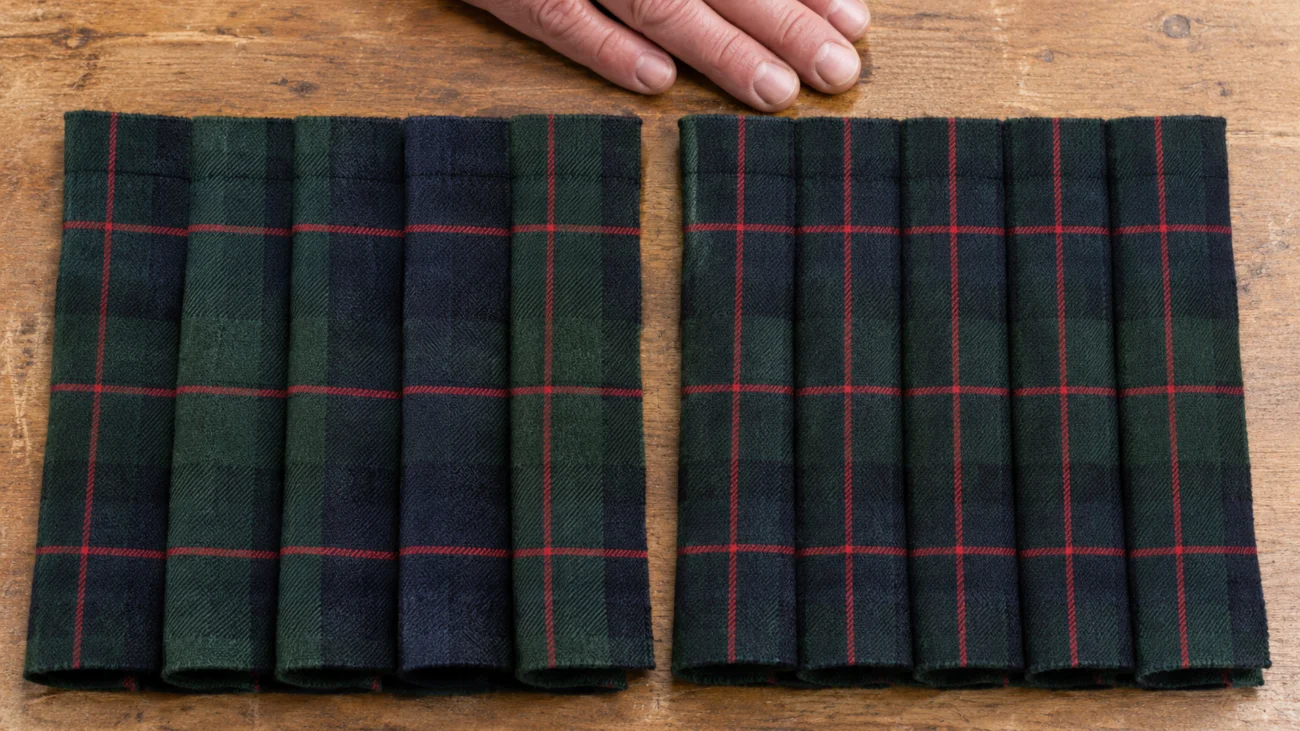
A piper ordering a band kilt and a wedding guest ordering a kilt for himself could choose the same tartan and want quite different backs. For a band order, get the band’s specification first. When the choice is yours, ask the kiltmaker to fold your tartan two ways. Choose pleating to the sett if you want to recognise the broad pattern of the front when you turn around. Choose pleating to a stripe if there’s one vertical line you’d enjoy seeing repeated across the back.
Featured image generated with AI.
Start with the front apron in view
The apron is the flat panel you see at the front of the kilt. Lay a length of your chosen tartan open and use it to stand in for the apron. Find a vertical line you can easily pick out. Follow the sequence of colours across the cloth until that line comes round again with the same neighbours on each side. The repeating arrangement is the sett. Two red lines can belong to different parts of it, so look at the bands alongside each one.
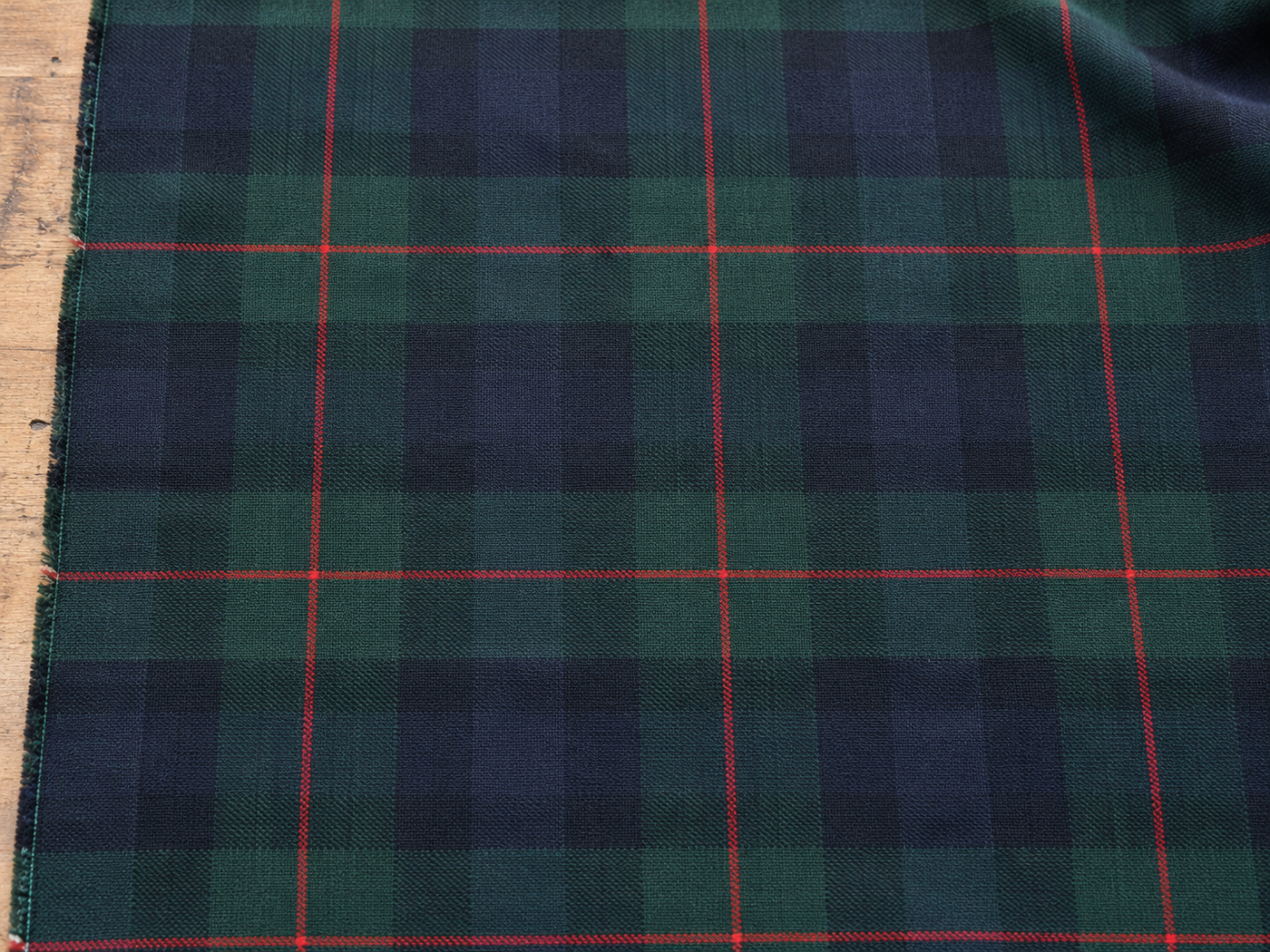
Suppose yours has a fine red line running through green, with a broad dark blue band each side of the green. Point to the red and then to the whole sequence. Which first made you choose this tartan? If you’re ordering at a distance, a photograph that shows a complete cloth repeat gives you and the maker a way to point at the same line. Include the maker’s cloth reference. A tight crop of red thread alone would fit any number of swatches.
Ask to see several pleats together
Set the two folded previews beside the open cloth, with the stripes running in the direction they’ll run on the kilt. In the sett preview, look across the visible face of each fold. One might show red against green, the next part of a dark band, the next its neighbour. Your eye can carry the pattern across the folds much as it can across the apron.
Now find that same red line on the stripe preview. The maker has brought a fresh occurrence of it onto each pleat. Count along the exposed faces. You may see the red five times in a space where the open tartan shows it only once or twice. The horizontal bands still cross the cloth. It’s the part you see running down each fold that changes the balance. CLAN’s kilt pleating guide describes both treatments and the placement of a chosen line on the pleat.
Have someone hold the samples upright and take a few steps back. Look at the open length first, then each sample in turn. You may love the red close up and find it quite emphatic in a row. Ask to see a quieter stripe folded the same way. Or you may discover that the red gives you exactly the back you had pictured. The maker can tell you which lines repeat at workable intervals in the cloth you’ve chosen and how many folds the preview needs to show the effect.
Keep the sample that settles the order
If the tartan is yours already, borrow the cloth intake note for a shirtmaker to record its usable width, length and any flaws. Give those details to the kiltmaker before agreeing to have a swatch cut. Ask for a loose folded preview if you want to keep the piece intact. The kiltmaker can tell you what your length allows. If the workshop is supplying it, ask for both previews from the cloth reference on your order. A photograph of another customer’s kilt may show the method clearly while giving you very little sense of how prominent your stripe will be.
Place a slip of paper beside the sample you’ve chosen. Write the cloth reference and the maker’s term for the pleating. For a stripe, add the colour and its neighbours. “Centre the thin red line in the green band on each pleat, as in sample B” gives the maker something to check even if there’s another red elsewhere in the sett. For a sett, keep a picture of the open cloth beside the folded preview. Ask the maker to confirm that picture with the order and keep a copy yourself.
The Sierra Highlanders Pipe Band’s dress manual names both the Ancient MacKay tartan and the blue stripe for its kilts. If you play with a band, take your own band’s current specification and the proposed sample to the person responsible for dress before the maker starts. Let the band’s uniform lead see the folded cloth as you ask, “Is this the back you want to see when our row turns?”
