

Stand two pieces of the same velvet against the back of a chair. Turn one upside down. In the light you expect at dinner, which one would you choose for the whole front of a jacket? Keep that piece upright, mark which edge points towards your collar and let the cutter check the layout before you approve it. A colour name on the order cannot tell the workshop which version of burgundy you saw.
Featured image generated with AI.
Give the pile a direction
The pile is the short raised surface your fingers meet before they reach the ground cloth. On a spare swatch, very lightly brush from one edge towards the other. Reverse your hand. One stroke may lay the surface smooth while the other lifts it enough to leave a visible path. Ask the cutter which direction their workshop calls “with the nap.” Put a pencil arrow on a paper tag, away from the velvet itself.
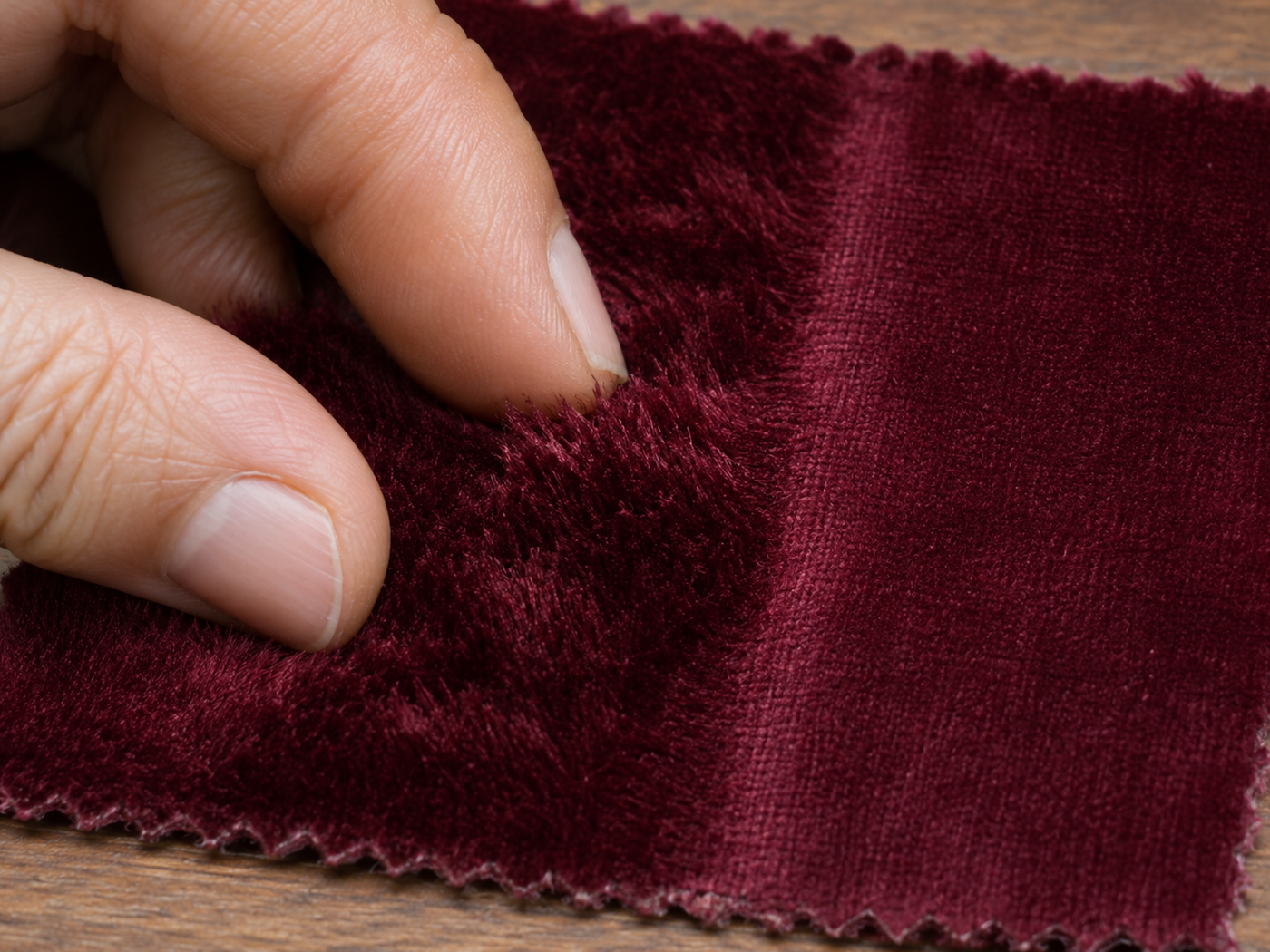
The Sewing & Craft Alliance guide to napped fabrics describes folding fabric back against itself and comparing how the two sides catch the light. It also explains why a pattern layout may call for all the relevant pieces to face one way. Its general observations give you a test to try. The degree of change on the actual jacket cloth is what matters when you’re paying for a cut length.
If you only have one swatch, take two views of it in the same place, rotating it between them. Keep a little of the chair in the picture so you can tell that the second photograph hasn’t simply been turned on your screen. Better still, ask for two offcuts from the same length, each big enough to hang under its own weight. A swatch book glued along one edge gives you fewer ways to look.
Take both samples to the window
Clip the swatches to a plain backing board, one pointing each way. Hold the board upright against your chest. Jacket fronts hang vertically, and laying both pieces flat beneath a ceiling light can conceal the difference you’ll notice across a table. Move to a window with the board still upright. Look straight at it, then take a step to the side. Does the deeper-looking piece keep its depth as you move, or does a band of reflected light travel across it?

Return to the evening lamp and give the samples the same turn. If you like the richer face by day but the quieter reflection after dark, choose which room gets the deciding vote. For a jacket intended for a particular dinner, try the cloth near a lamp of the sort you expect there. A phone camera may brighten a dark sample. Make the choice with your eyes and use the photograph to identify the pieces afterwards.
Tell the cutter where the collar was
Take the selected swatch down without rotating it. Put it in a paper sleeve with its top edge still visible and draw an arrow on the sleeve pointing towards an outline of a wearer’s head. Label the other edge “hem.” Tape a photograph of the upright pair beside it and circle the chosen piece. Now a person at the cutting table can recover the orientation even after the swatches have spent a week in an envelope.
Ask which parts of your particular design can follow the approved direction, especially if you want a large patch pocket cut from the same velvet. On paper a pocket piece might fit very neatly in a gap upside down. On the jacket it could catch the light as a separate rectangle. If you’re bringing your own length, the cloth intake note for a maker helps you record the usable dimensions and where the sample came from.
On the sample card, sketch the upright rectangle and the collar arrow. Add one observation from the evening test in your own words, perhaps “the right-hand sample stayed dark beside the lamp.” Leave room for the cutter’s answer to a final question. “Can you cut the visible fronts, sleeves and pockets in the marked direction from this length?” That answer and the actual swatch belong together when the cloth is released for cutting.

One thought on “Which Way Should the Velvet Run on Your Evening Jacket?”