
A photographer asking for a field jacket needs to show the cutter one movement. Let the camera hang where it usually rests, bring it to your eye and hold it there while somebody looks at your back. Two jackets can both have an “action back” and let out cloth in quite different places. Choose the one whose folds open where you need them and fall back into the outline you like when the picture is taken.
Featured image generated with AI.
Find the reserve cloth
Hang the first jacket with its back towards you. In a centre-pleated version you may see just one vertical line between the shoulder blades. Ease the two lips of that fold apart with your fingertips. The cloth tucked behind them belongs to the back. It can come into view when the wearer reaches forward. Find the point where the maker has stitched the fold shut. That point tells you where the release can start.
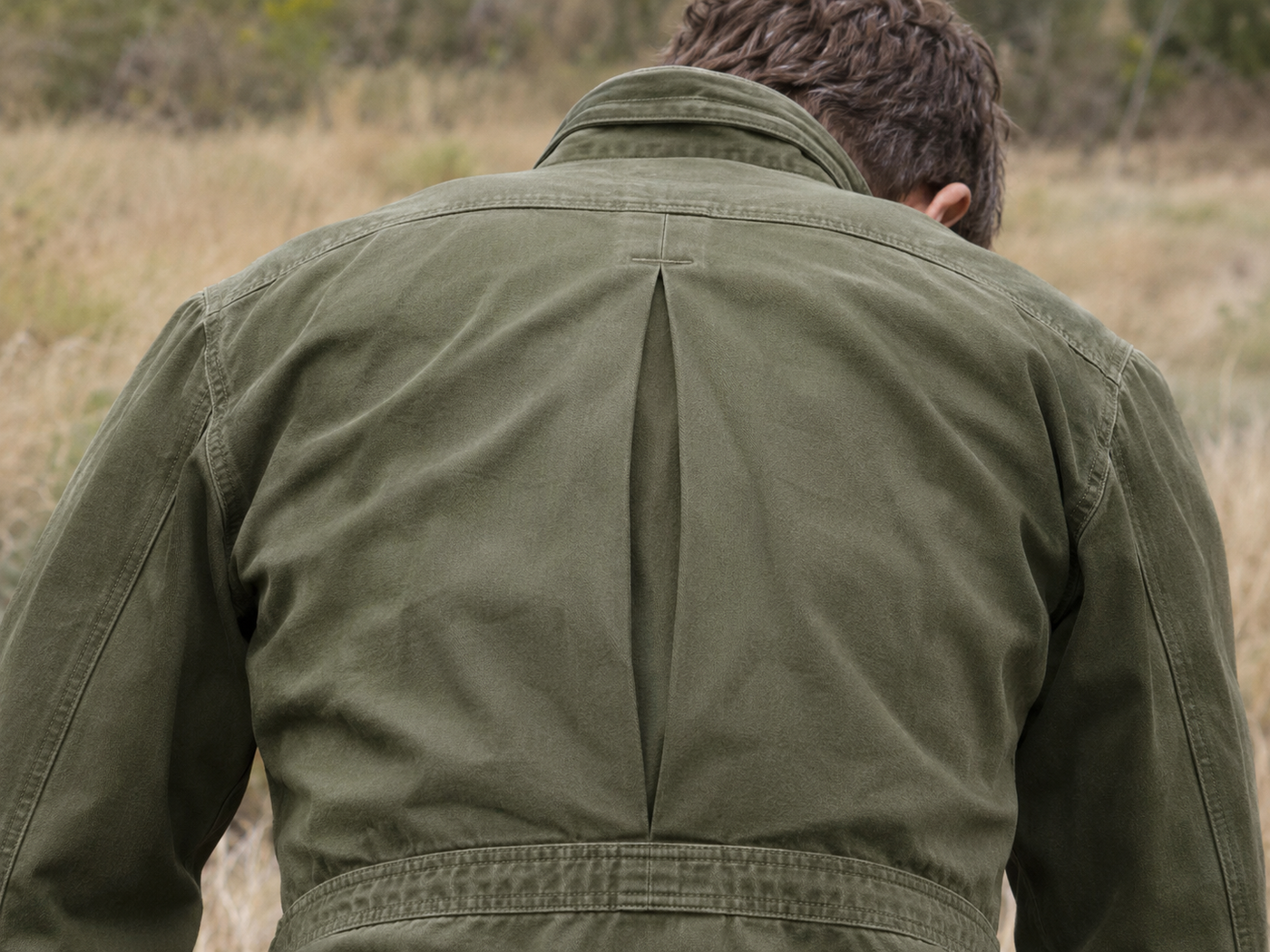
The Armoury’s account of its Ascot Chang safari jacket describes an inverted box pleat down the centre. On that particular jacket the fold closes with the arms lowered and opens when both arms extend. That is a good reason to take the jacket off the hanger. The neat line you see on the rail is only one of its two working positions. The same maker identifies two action-back pleats on its Safari Jacket II, an example to put alongside the centre-fold design.
Now look at a jacket with a fold near the back of each armhole. Follow one edge with your finger, from its upper stop to its lower one. Do the same on the other side. Ask the maker to open a demonstration sample so you can see what the lining does behind the shell. If the lining conceals the back of the fold, an outside photograph gives you very little information about how much room there is inside.
Let the camera set the test
Use your own camera, usual strap and the shirt you wear for a long assignment. If two samples are available, ask for comparable sizes and cloth weights. Empty both jackets’ pockets or load them the same way. A spare lens weighing down one side can pull an otherwise quiet fold open before you’ve touched the shutter.
Start with a picture of the back at rest. Raise the camera for a horizontal shot and give your partner time to see the first fold open. Then turn the camera for a vertical shot. Your elbows are doing different jobs now. On a paired back, one pleat might open further than the other as your upper arm changes position. Ask your partner to photograph that difference from directly behind. Repeat the sequence in the other jacket, including the moment you lower the camera.
Tell the cutter which part of the sequence you actually do most. A photographer holding position through a graduation ceremony may care how the jacket feels after several minutes at eye level. Someone dropping the camera repeatedly to talk to a portrait subject might notice the return to rest every time. For a seated assignment, try it seated. A back that looks orderly standing can meet the chair before it has a chance to settle.
Mark the view you want the cutter to keep
Draw the back of the preferred jacket twice. Put the collar, shoulder ends and hem in both outlines so the cutter can place your marks. On the first, mark each folded edge with a solid line and put a small cross at each stitched stop. On the second, shade only the cloth you could see newly exposed with the camera raised. A phone photo beside each sketch will preserve where your right and left elbows were.
If your best sample had two openings, identify both. “Use the paired folds on sample B, starting below the shoulders here” gives the cutter more to work with than “plenty of action in the back.” Add what you want to see when the camera comes down. Before approving the design, put this question to the person making the jacket. “Can you show me how the lining will let these two folds open at my camera position?” Keep the answer with the marked rear view.
