

Imagine your portrait the size it will actually appear. Is it a face beside a faculty biography, or a half-page photograph introducing the person who built a set? Choose one true detail of your working life that should survive that frame. Dress around it, agree a crop with the photographer and send a short brief to the person commissioning the picture. The same professional can quite reasonably need two different photographs.
Featured image generated with AI.
A good wardrobe decision often happens several days before the sitting, when somebody asks where the picture will run. An impressive studio apron has little to say in a tight crop that ends above its bib. A favourite jacket may tell a visiting student exactly what their lecturer looks like at the classroom door. Start with the person trying to recognise or understand you.
Name the reader on the other side of the picture
Ask the editor or communications office for the destination, the kind of portrait and an example of its usual framing. Find out whether the image will also appear in a square directory tile, a wide banner or a printed programme. If multiple uses matter, request a priority. A photograph composed around hands at a worktable may survive a wide crop beautifully and lose the entire action in a little circle.
Write a sentence beginning “When this person sees my picture, they should recognise…” Finish it with an occupational fact or relationship. A prospective student might need to recognise the person who teaches the first studio class. An awards panel might need to recognise that the same person works directly with materials. “Successful” is difficult to frame. “The teacher who works alongside students at the bench” gives the photographer a decision about setting and clothes.
Some commissioners have precise requirements. The University of New England’s faculty and professional staff profile guide calls for a shoulders-up portrait with a simple background and asks for enough room around the subject for framing. In that setting, build the clothing decision around what remains near the face. Check the specification from your own commissioner before you arrive with a concept that needs a full-length photograph. University of New England’s profile photo guide If the commission calls for academic dress, confirm which regalia go with the faculty member’s role before bringing a gown to the session.
Find a detail that belongs to the work
Look at what you wore for a recent day doing the relevant task. It might be an overshirt with sleeves turned clear of wet clay, a jacket with the collar you always choose for a lecture or an issued shirt that identifies a public-facing role. Choose something you could plausibly wear the day a reader met you. Then ask whether its meaning will be clear to someone outside your profession.
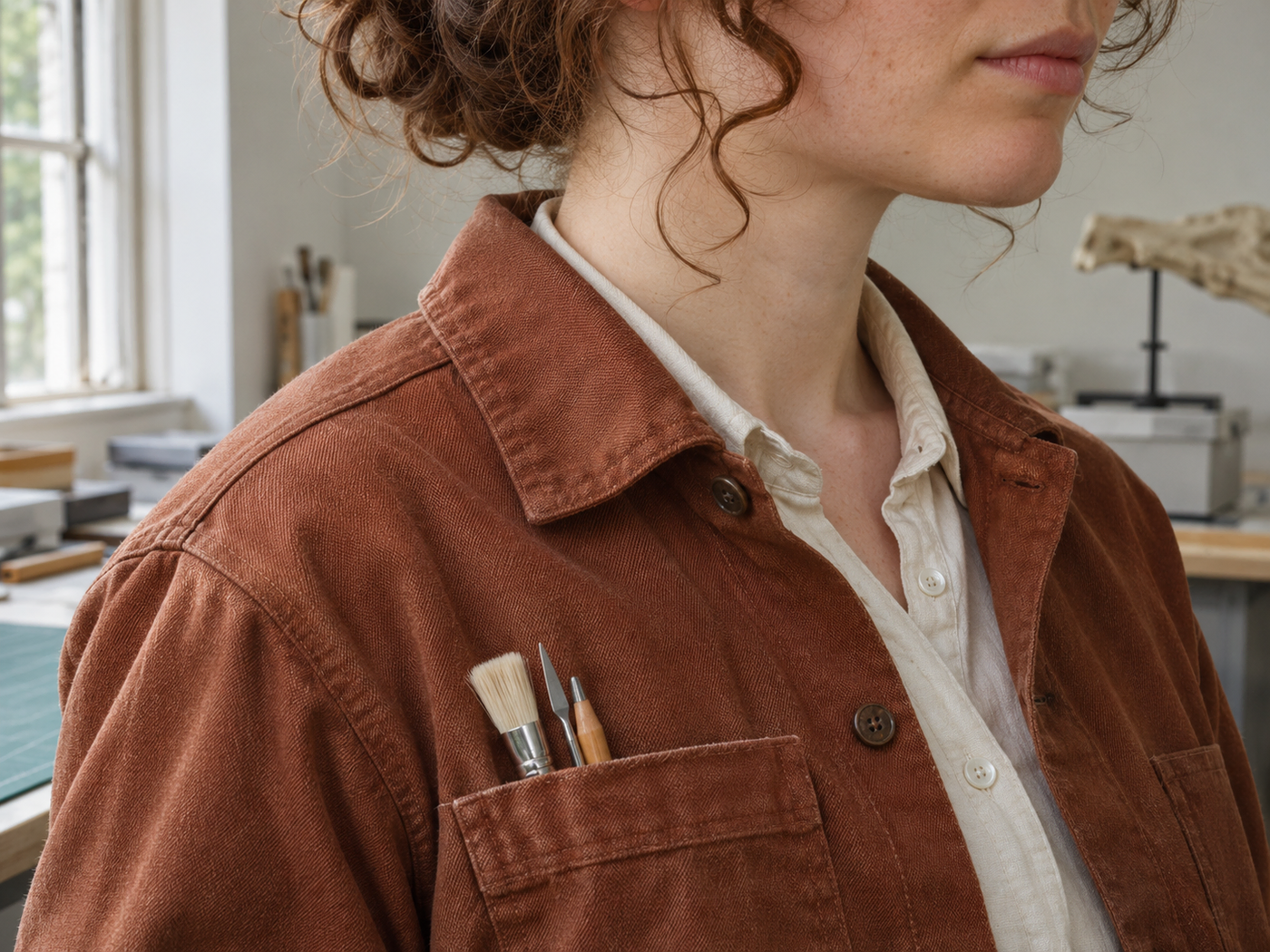
Take an imagined museum preparator who makes supports for objects going on display. At the workbench a rust-coloured overshirt with a turned cuff shows how the preparator dresses for close work. In a tight biography portrait the same overshirt can still be visible at the neckline even if the cuff disappears. Those are two different uses of one authentic garment. For the wider image, the cuff and bench together do more work than an assortment of props borrowed for the sitting.
Ask about permission if the detail includes an employer’s identifier, an institution’s regalia or an item connected to somebody else’s project. A badge can identify a location or imply a capacity the commissioner did not intend. For a prescribed outfit, confirm which uniform elements may be varied before choosing the jacket or layer that will show most prominently. A personal portrait outside work may need a different answer.
Make a crop before you make a purchase
Stand in the proposed outfit and take a simple test frame at the height the photographer is likely to use. A colleague with a phone can do this. Keep the full frame and make a copy at the likely final crop. Put the two side by side and name what disappeared. Look especially at edges that cut through a collar, the top of a pocket or the hand doing the work. If a jacket fills the frame, check where the notch sits on its lapel in the final crop.
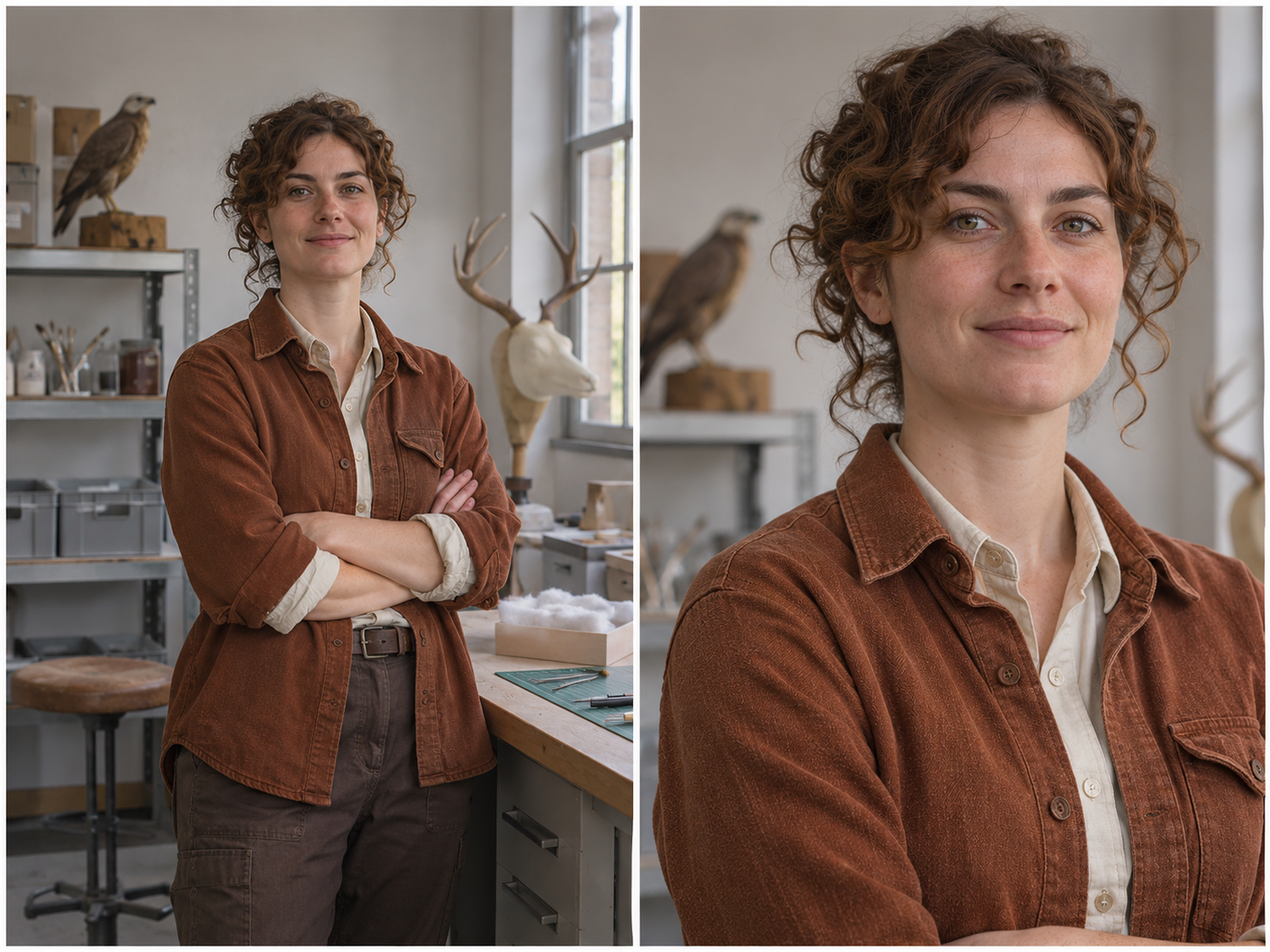
For a directory image, shrink the copy until it is about the size of the actual listing on a phone. Can someone still tell where the jacket ends and the background begins? Is a strip of contrasting undershirt drawing their eye away from your expression? Try fastening or removing one layer before reaching for a new garment. It is often possible to get a clearer frame from a shirt already in use.
For an environmental portrait, check the edges in a different order. Start with the work detail and move outwards. If your sleeve is turned to clear a surface, include enough of the surface to explain the turn. A sliver of bench at the bottom can look accidental. If the action requires a colleague’s hand or a student’s work, the editor needs permission for that material too. Choose an unidentifiable practice piece if it will explain the work just as well.
Two briefs for one teacher
Picture a ceramics teacher asked for a departmental biography. Students will use the small portrait to find the right person on their first day. The teacher chooses the dark overshirt they regularly wear to introduce a class, a plain base layer and a shoulders-up frame against a quiet wall. Their face is easy to find, the neckline looks familiar and there is no need to squeeze a potter’s wheel into the frame.
A second request comes from a studio-practice award. The reader now wants to understand how the teacher works. The teacher keeps the overshirt, rolls the sleeves as usual and asks for a wider frame at a working table. A cloth or apron that genuinely belongs to the activity can enter the picture if it helps explain the action. If the proposed activity uses a wheel, choose the apron worn for actual wheel work before turning it into a visual shorthand for every kind of studio practice.
The change in clothing is small. The change in what must survive the crop is substantial. For the biography the brief names the shoulders and collar as the lower edge of interest. For the award it names the forearms, working surface and object being handled. This also tells a photographer when to interrupt. A lovely expression cannot rescue an award picture whose most informative detail is just outside the frame.
Settle what the photographer and subject each control
Ask the photographer how the setting and frame can accommodate the preferred detail. Tell them what clothing options you can bring. They may suggest moving a chair, changing the camera height or making an extra exposure for a tighter crop. You can decide whether the suggested activity looks like something you actually do. The commissioner settles what will fit the layout and any restrictions on identifiers.
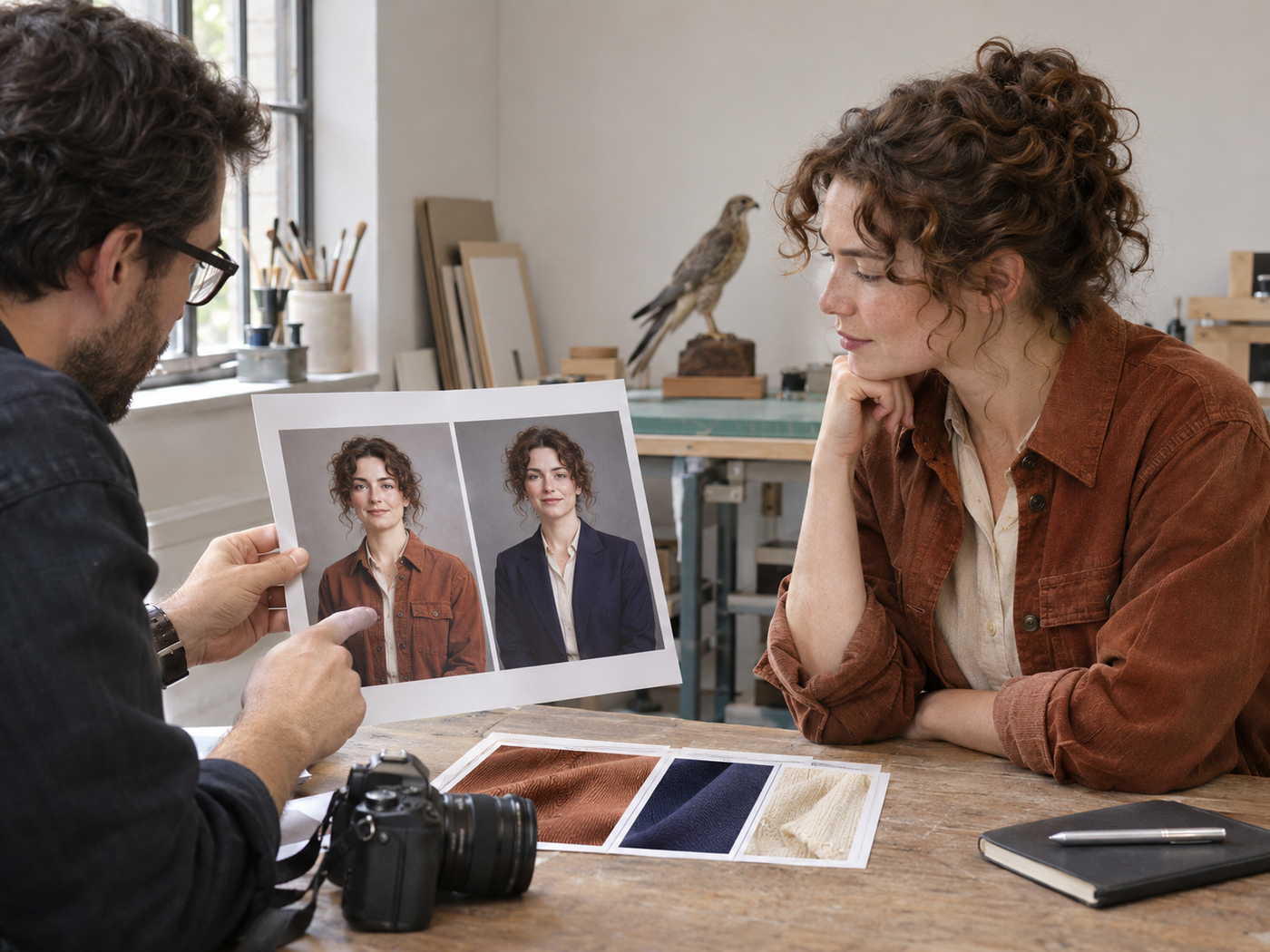
Give the photographer a small, meaningful choice of garments. Two shirts with different necklines can solve a tight-crop problem. A bag of unrelated outfits and a request to “make me look professional” moves the difficult decision to the busiest part of the session. Bring a familiar jacket if its shape matters and hang it so it is ready to wear. Try sitting as well as standing if the proposed portrait is seated.
If a surface catches the light or a work detail is hard to see, look at a test frame together. Name the actual issue on the screen. “The dark cuff disappears against the chair” sets up a choice of chair, cuff or camera angle. There is no need to abandon a truthful work detail simply because the first arrangement failed to show it. Ask to see the corrected crop before moving on.
Send the brief in four sentences
- Identify the intended reader, the publication and the smallest crop that matters. If there are two distinct uses, name the priority or request a frame for each.
- Name the role and one visible detail that belongs to it. Give the photographer a reason it matters so they can recognise it even if plans change.
- State the outfit, the setting and the frame needed to preserve that detail. Mark anything requiring permission and who will confirm it.
- Agree who selects the final image, whether a test crop is available and what the commissioner needs supplied.
For the studio teacher, the second brief could read, “The award profile is for readers interested in my working process. I will wear my usual overshirt with the cuffs turned while I shape a practice piece. Please frame from the head to the table edge with both forearms visible. The editor has cleared this work surface, and I would like to see the intended crop before we put the piece away.”
Read your brief once while looking at the test photograph. If you can point to the occupational detail and it remains meaningful at the final size, the clothes have earned their place in the portrait.