
Read the invitation for the capacity in which you will process. A visiting lecturer representing a department, the holder of a university office and someone receiving an honorary degree can all appear in the same procession. Ask the host which capacity it has assigned to you. Then ask which gown, hood and headwear express that capacity at this ceremony, and who is responsible for supplying each piece.
Featured image generated with AI.
A gown is only the beginning of an answer. Two faculty members in similar black gowns may wear different hoods because they earned degrees at different institutions. A person who usually wears one ensemble may have been invited to appear in another capacity entirely. Write the answer to “Whom am I representing here?” at the top of your enquiry before opening a rental form.
Find the person on the invitation
Read the line with your name, the heading of the procession and any accompanying message from the organiser. Note whether you are marching with a faculty group, escorting a candidate, representing another university or acting as an officer. If the wording says only “join us for convocation”, ask whether that means a place in the academic procession or an invitation to attend. Those are different requests for the robe office.
Give the host the date and the ceremony session as well as the department. A university running several ceremonies may have a separate assembly plan for a particular faculty or group of graduates. Ask for the instructions sent to the people processing in your role. A student’s gown collection notice can be impeccably accurate for its audience and send a faculty guest to the wrong counter.
Write the organiser’s name or office beside the role. If you are attending on behalf of another institution, record the contact at your home institution as well. The host can confirm your place in its ceremony. Your own institution may be able to identify the pieces associated with a degree or office it conferred. It is much easier to reconcile the two replies when both refer to the same session and capacity.
Put the possible regalia on one short list
Write out the exact names of the degrees that might be relevant, the awarding institutions and any office you currently hold. Include an honorary distinction only if it affects the question. Keep “earned”, “honorary” and “office” legible. The organiser may have separate instructions for each. Resist the temptation to choose the most elaborate garment first and then look for a role it might represent.
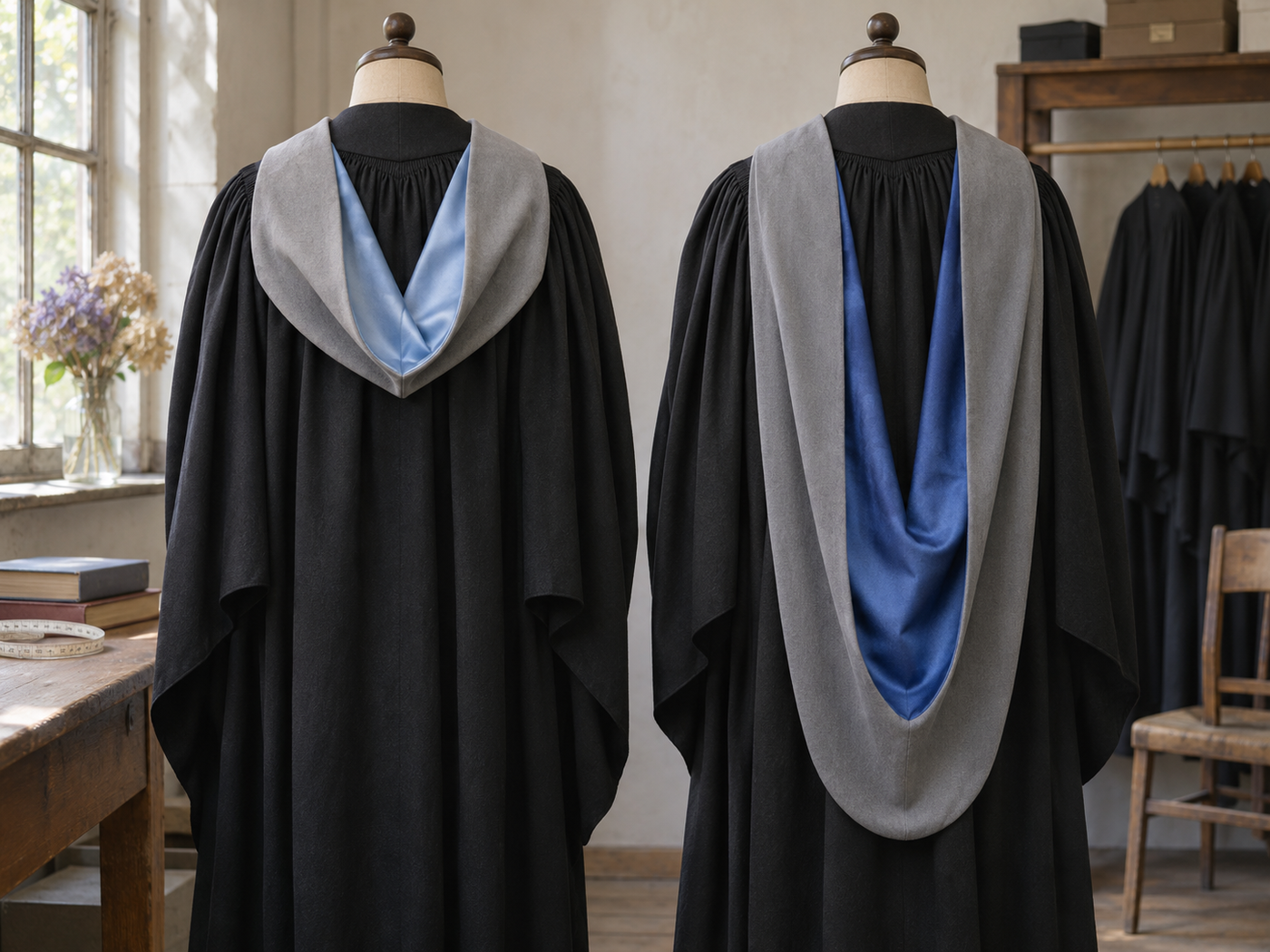
For each possibility, record what you already own. Identify a gown, a hood and any cap or other headwear individually. Describe a hood’s shape and visible lining, and keep a label, receipt or institutional specification with it if available. Colours seen on a screen can be unreliable. Two hoods that look close on a hanger can represent different degrees. The supplying institution or robe office can identify which description belongs on the order.
If an older piece has family importance, tell the office exactly what it is and how it came to you. Ask whether it is suitable for the role before deciding to wear it. A decorative resemblance or a shared degree title can be insufficient. If a ceremonial piece must be replaced, identify the issuing body for a replacement stole and keep its answer separate from the host’s decision about this procession.
Two official examples give different ordering questions
For its Fall 2026 academic procession, the University of Toronto in Canada described a rental supplier able to provide black gowns for faculty and staff. It specified that the supplier could provide hoods for University of Toronto degrees only. It also directed governors to a separate office about a governor’s gown. Those particulars explain why a visitor should ask what the host can supply as well as what it expects the visitor to wear. University of Toronto’s academic procession instructions
In the United States, California State University San Marcos instructs faculty to wear regalia appropriate to their highest earned degree and discipline. Its commencement information says faculty obtain their own regalia and identifies rental and purchase routes. A faculty member reading that instruction has a definite starting point for contacting the supplier. It applies to the role and ceremony described by that university. Another host needs to give its own answer. CSUSM’s faculty regalia instructions
For a visiting or honorary role, say exactly which role the official page covers and which one remains to be settled. If the published instructions address local faculty only, a visitor can ask whether the same convention extends to visiting representatives. If you are receiving an honorary degree, ask when any regalia associated with the presentation will be provided and worn. You should not have to infer an order of dressing from a picture of last year’s stage.
Work through a visitor with two degrees
Imagine a music lecturer with a master’s degree from one university and a doctorate from another. A third institution invites the lecturer to represent a partner department in a procession. The lecturer owns the master’s hood, can hire a doctoral gown locally and has been offered a spare hood by a colleague. The three offers might make a complete-looking outfit. They do not establish which degree the host expects to be represented.
The lecturer writes, “I will process as the visiting representative for the music department at the afternoon ceremony. I hold these two degrees from the institutions listed below. Which degree or office should my regalia represent? If you expect the doctoral set, can your supplier provide its gown, hood and headwear, or should I bring any of those from the awarding institution?” This gives the organiser a question it can answer without reconstructing the person’s career.
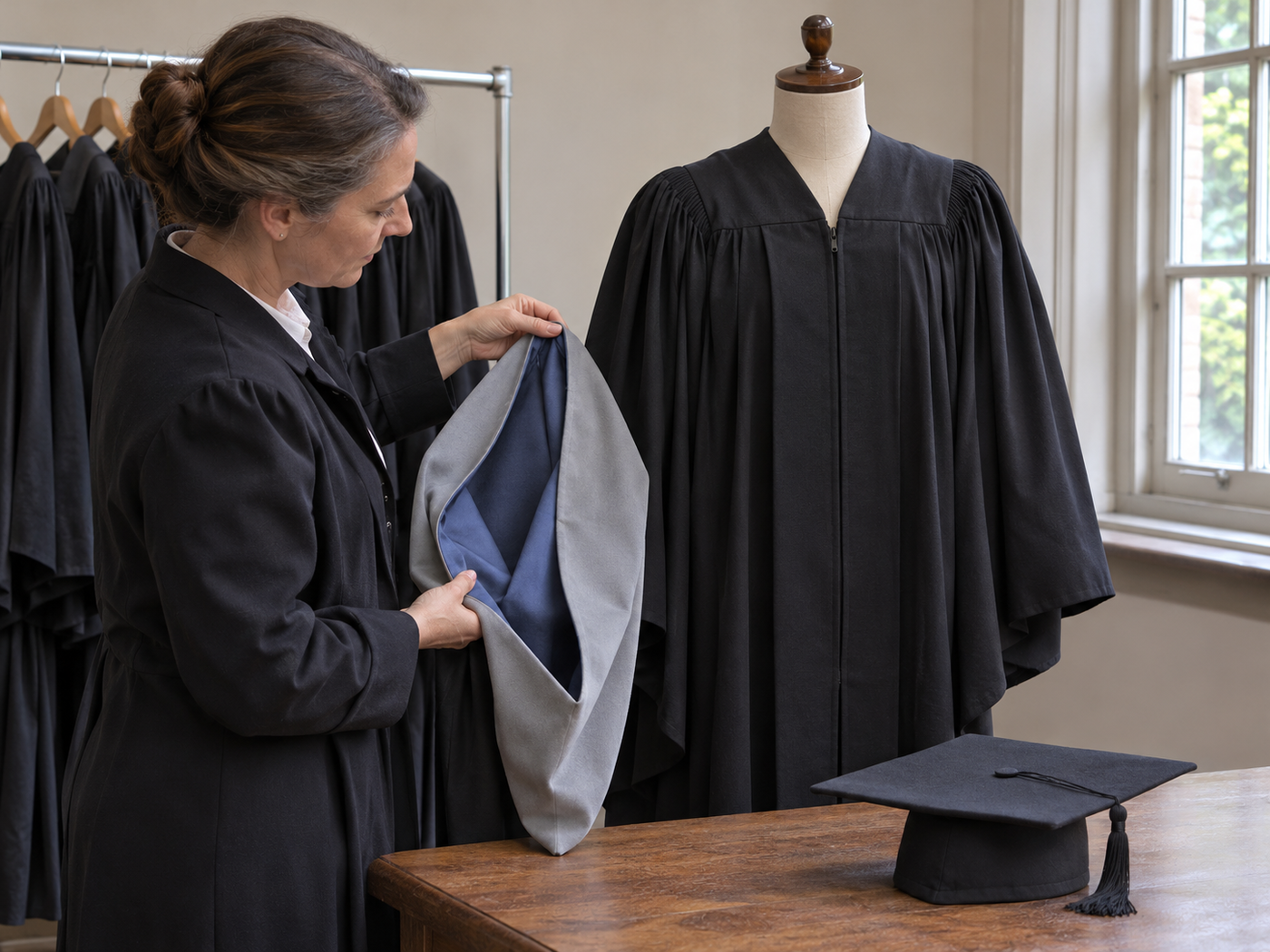
Suppose the host confirms the doctoral set and can loan a gown, while the home institution can arrange the correct hood. One item is still open. Ask what headwear is expected and whether any part of the ceremony changes how it is carried or worn. Record the answer beside the other two pieces. If the home institution cannot supply the hood in time, return to the host for an approved alternative. A colleague’s spare becomes relevant only when its identity and acceptability are confirmed.
Choose between borrowing, hiring and buying
Once the list is settled, compare complete arrangements. For a loan, ask how the robe office identifies the pieces at collection, when you can try them and when each must be returned. For hire, ask which pieces the price covers, whether delivery and return are included, and what happens if the specified hood is unavailable. Avoid comparing a price for a gown alone with one for a complete ensemble.
Check whether a loan or hire comes as one inseparable set. A visitor bringing a hood from home may need only the host’s gown. Ask the supplier to write precisely which items it expects back, especially if everything will be carried in a single bag.
For a purchase, consider how often the same specification will be appropriate and whether the supplier has a reference from the awarding institution. Ask for current delivery timing and a written description before paying. If you expect to take on an office next year, the ordinary faculty ensemble may still serve other occasions, but a future office may have its own regalia. Let the actual invitations determine the value of owning the pieces.
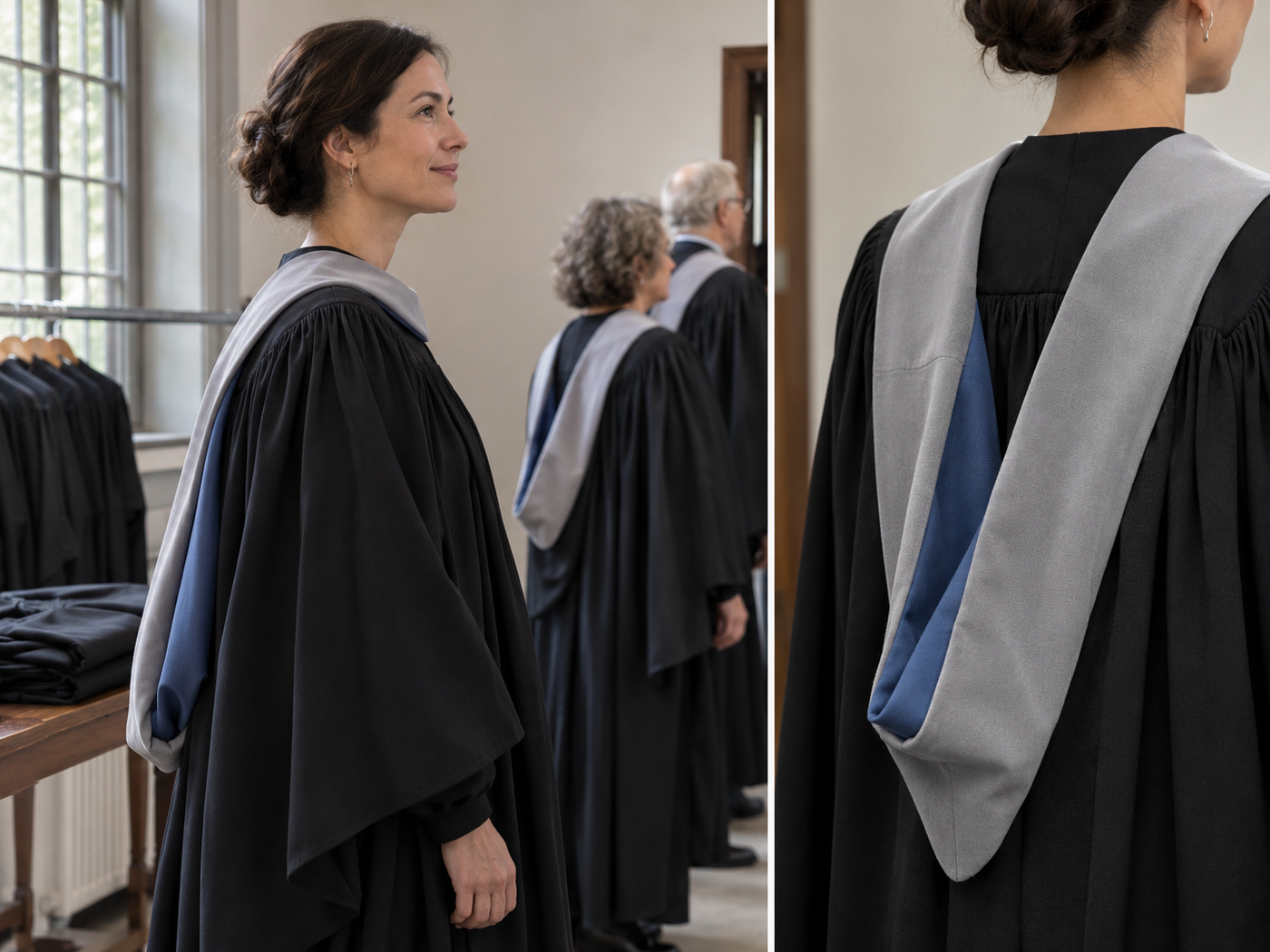
If you will also present or hood a candidate, ask for the doctoral hooding rehearsal instructions for that separate action. Rehearse in the arrangement the marshal has approved. If a programme portrait will show your own academic dress, brief the photographer on the professional detail and crop and check with the institution before circulating a picture of reserved insignia.
Confirm the set at collection
- Give the robe officer your name, exact capacity and ceremony session. Have the confirmation ready if the available set appears to differ from the one you were promised.
- Check the gown, hood and headwear against the written specification one at a time. Identify anything you brought yourself so it goes home with you after shared items are returned.
- Ask who will help arrange the pieces before assembly, where to join the line and which counter receives the return. Record a contact for a last-minute substitution.
Try the set in time to raise a question quietly. Ask the robe officer to look at the hood as it falls over the back of the gown. Take just the reference photograph the office permits if you will have to arrange it again. Put the three-piece list and return instructions together so that a borrowed item is easy to account for when the procession disperses.
The most useful closing question is the one a marshal can answer at a glance. “For the role beside my name in this procession, is this the full set you expect to see when I join the line?”