
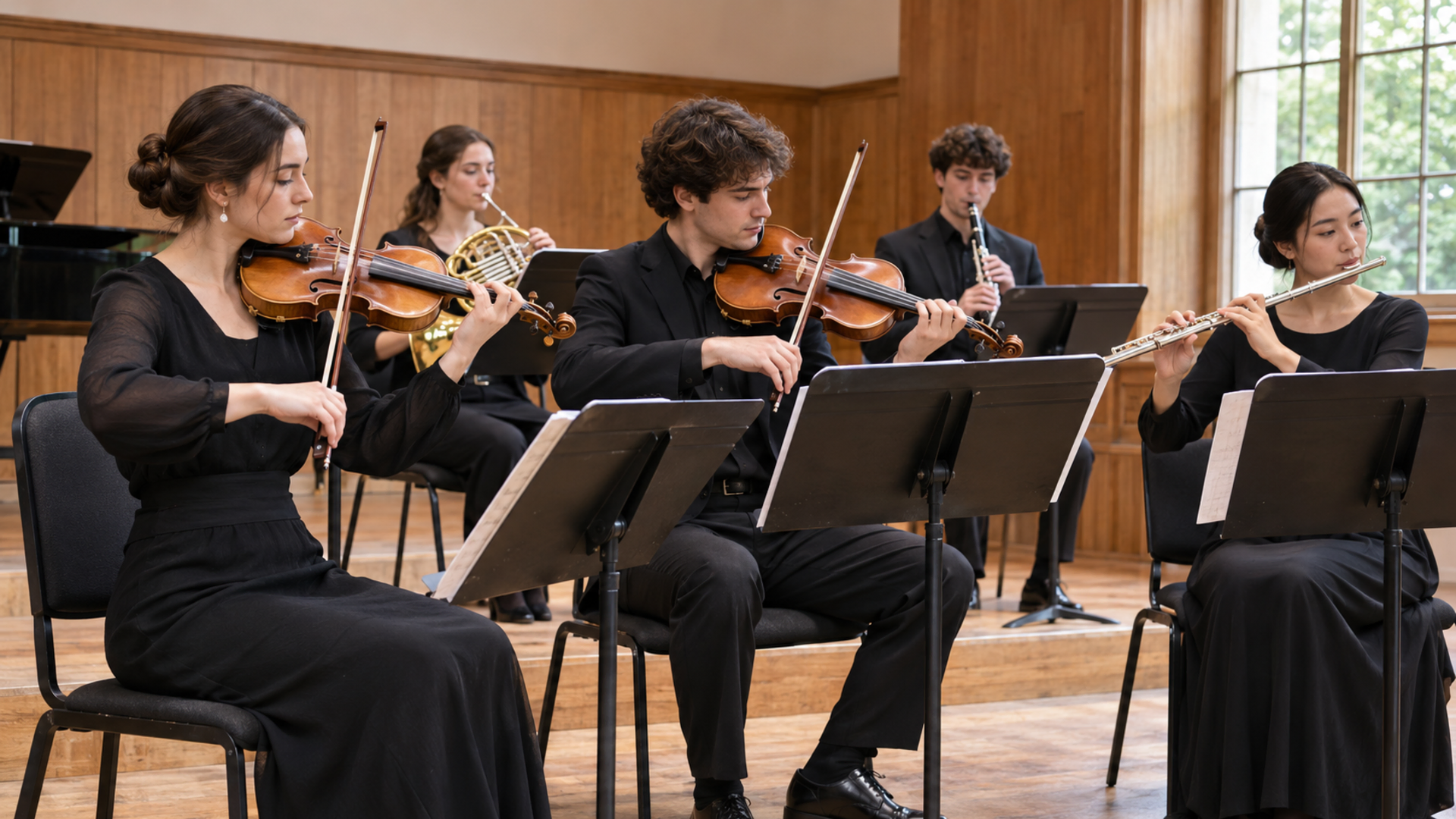
Your first call is for a particular programme, in a particular chair. Ask the personnel manager for the dress instructions that go with that call. Build one complete outfit from the permitted choices and play in it before packing. A sleeve that looks right when your arms hang down still has to let you reach the end of a bow stroke. The test is whether you can do your job while looking like part of the section.
Featured image generated with AI.
Start a small card with the orchestra, date, venue, programme and instrument. If there are two services that day, give each its own line. Include the name of the person who sent the instructions. When a colleague says the outfit changed last season, you will know precisely which detail to check and where to send the question.
Read down the right column
Look for the category of performance before pulling clothes from a wardrobe. An outdoor afternoon concert, a subscription programme and work in an orchestra pit can have different instructions even within one organisation. In its published 2024–25 agreement, the Idaho Falls Symphony in the United States described separate attire for those settings. Its outdoor example paired white tops with black bottoms, while the pit called for black throughout. That dated example shows why the call matters. Obtain the sheet for your own engagement. Idaho Falls Symphony musicians’ agreement, concert attire
Read a complete option from top to bottom. A sheet might offer a tuxedo combination and a different long-sleeved combination. The white shirt permitted in the first does not automatically travel into the second. If the list says “choose one”, mark the option you intend to use and copy the pieces together. Include socks, shoes and any specific fastening or neckwear. Small omissions become obvious when you sit on a raised platform.
Distinguish a condition from a preference. “Black long sleeves” identifies something the manager can check. “I like a shirt with a soft cuff” is something you can settle once you know that shirt is allowed. “The player beside me has short sleeves” gives you a question. They may have a different role or an agreed exception. Ask privately about your own choice without requiring a colleague to explain theirs.
Build the outfit from the chair outwards
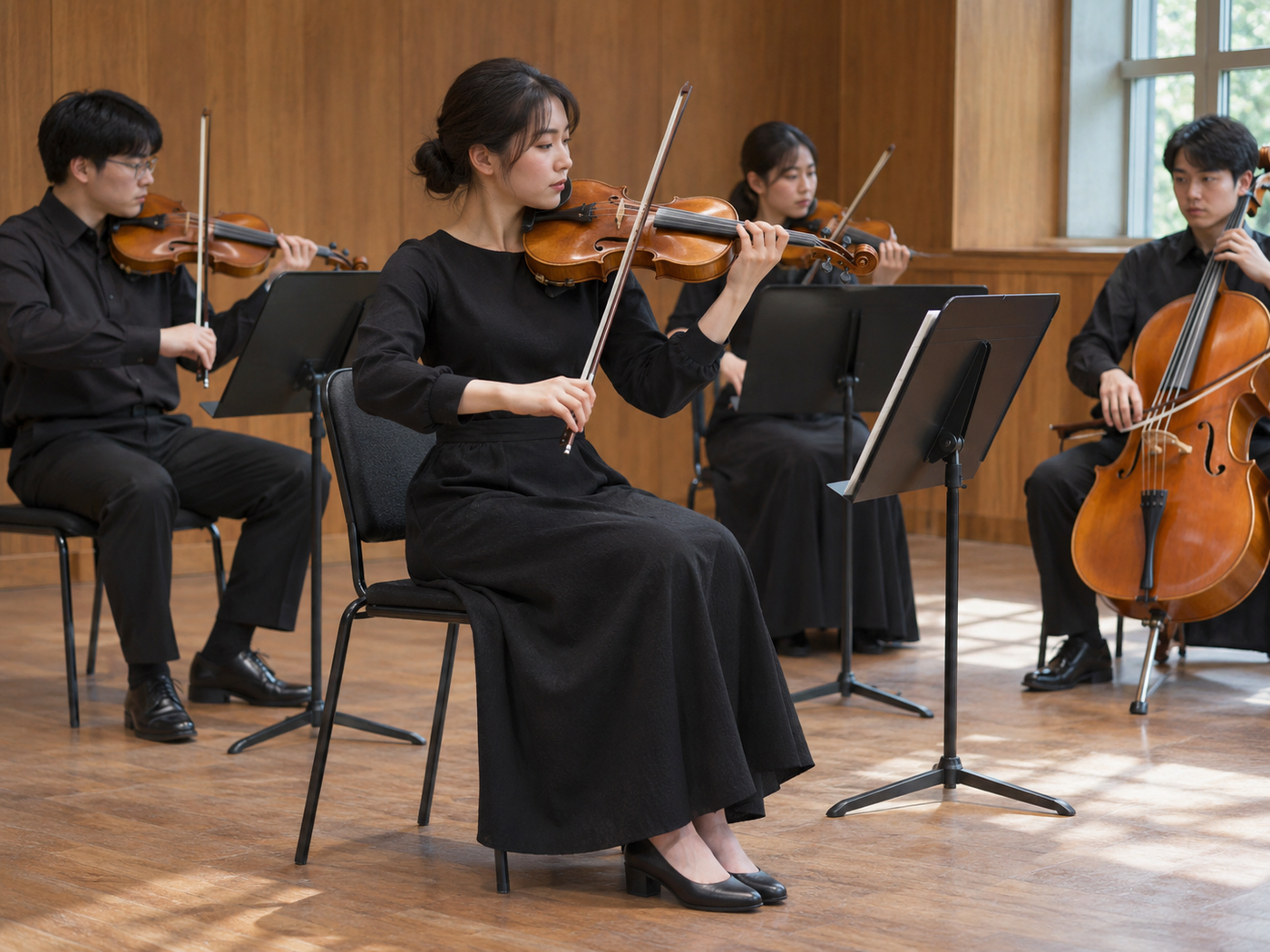
Set out the seat, music stand and instrument you will use, or the closest reasonable equivalents at home. Put on the shirt, jacket if called for, trousers or other permitted lower garment, socks and shoes together. Sit at playing height. Set your feet as you usually do. Now look at the visible break between trouser hem and shoe and the area at the wrists. A garment judged while standing may show considerably more of a contrasting layer from a chair.
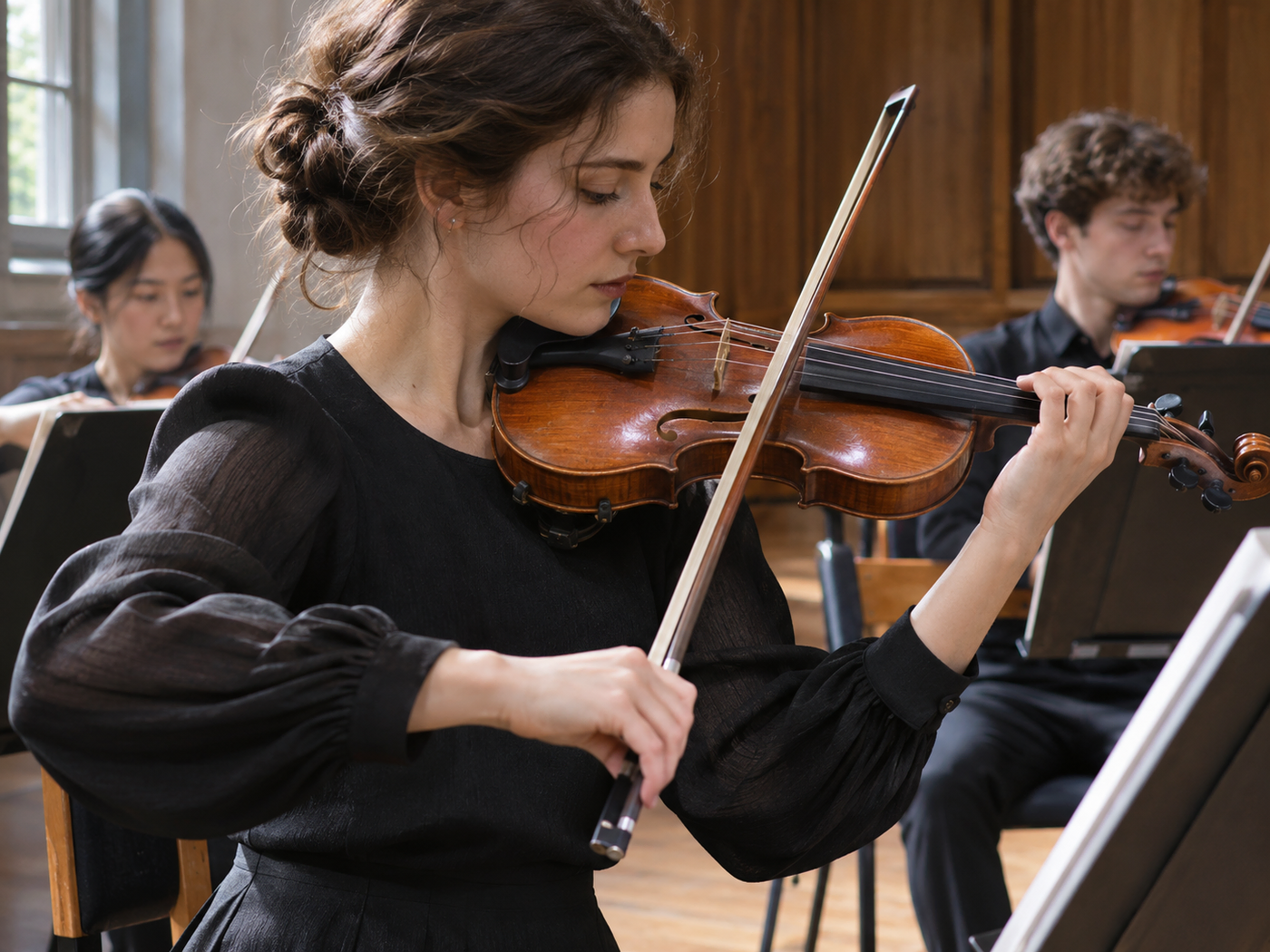
For a string player, start slowly with the instrument in its ordinary playing position. Use the arm movement that usually takes the most room, then return through the opposite end of the stroke. Notice whether the sleeve binds across the back or the cuff catches where your hand needs to turn. Repeat with the jacket fastened or open as the role requires. Tell the manager exactly which layer causes a problem if the approved outfit needs an alternative.
A wind player has a different trial. Sit with the instrument supported as usual. Bring it into position, take a normal playing breath and move between playing and rest. Check the collar, front opening and any layer beneath a jacket at both points. With permission and in an appropriate place, play a familiar passage that calls for the breath and reach you will need. An outfit can pass a quick mirror check and still make the ordinary reset between entries awkward.
Choose movements that represent your part. A percussionist may walk between stations and reach sideways. A cellist needs to check the front and sides of the seated garment around the instrument. A player changing instruments needs space to put one down and lift the other. The task is yours to describe. A useful account reads “the cuff meets the mechanism when I turn my wrist” rather than “the shirt feels wrong”.
Check the sounds the clothes can make
In a quiet room, repeat the movement between rest and playing. Listen for a hard button tapping an instrument, a piece of jewellery touching a stand or a stiff layer rustling on a chair. Work through one suspected source at a time. Take off an optional item and repeat the same motion. If the sound disappears, you have a specific change to consider within the dress instructions.
Ask before making any recording at rehearsal. A simple visual check by a stand partner can answer whether an undershirt shows on a reach. A brief trial offstage can answer whether a cuff catches. If a particular performance uses microphones close to the players, ask the production contact or manager when they want movement noise checked. Keep that decision within the ensemble’s rehearsal arrangements.
An accessory can have a musical function as well as a visual one. If the assignment involves handbells, for example, ask who specifies the gloves for the handbell choir. The choice needs to fit the instrument and the ensemble’s instructions. A general recommendation about concert clothing cannot settle a piece of equipment or an established handling practice for a section.
Read the section as the audience will see it
Have someone view the outfit from a few rows back if the ensemble permits. From that distance check the broad shape, areas of exposed light fabric, shiny hardware and high contrast at the feet. The goal is to see whether your chosen option joins the section in the intended way. You can do a preliminary version at home by sitting in front of a plain wall while someone stands at the far end of the room.
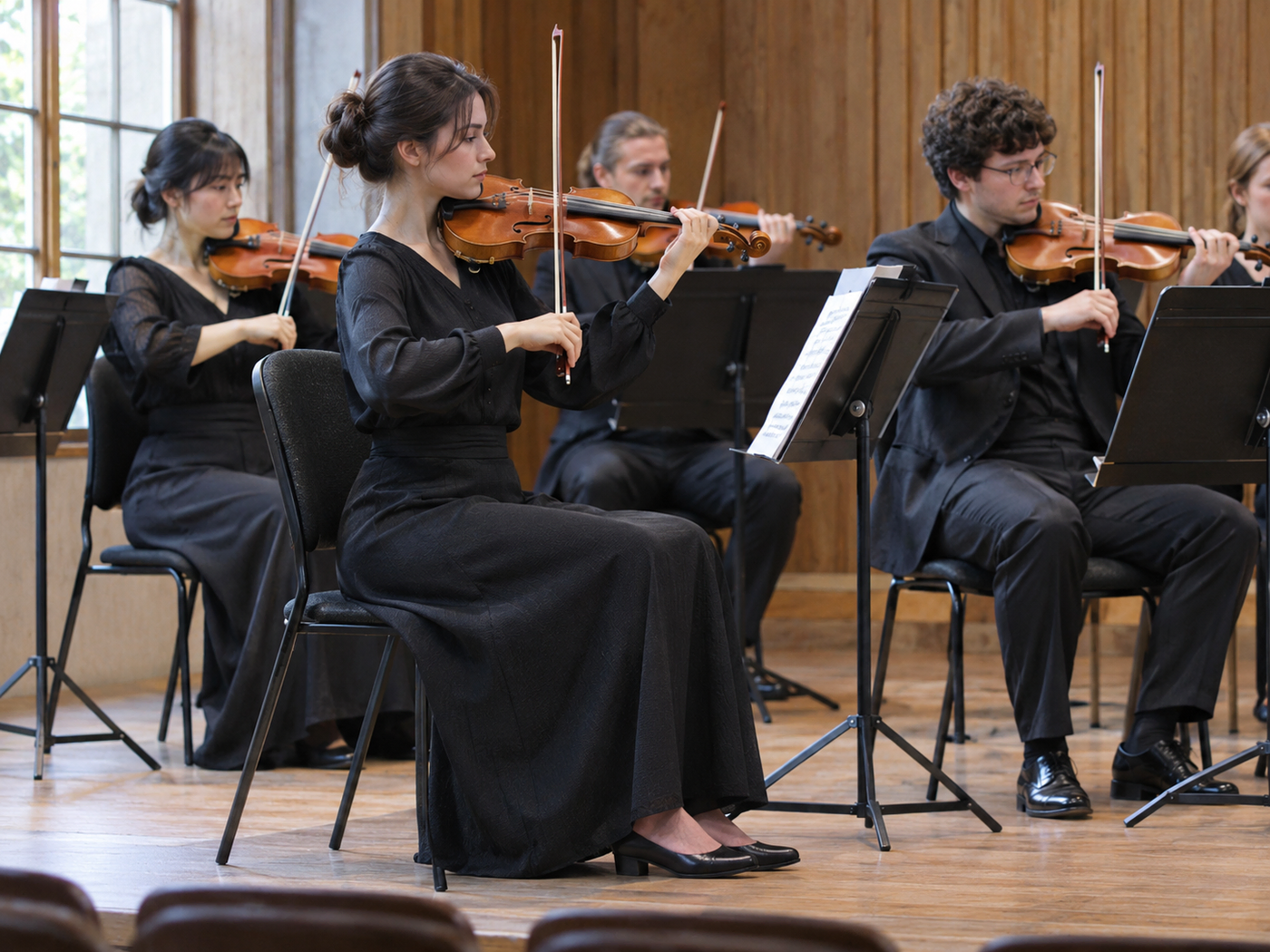
Imagine two new players receiving the same all-black option. The violinist chooses a shirt with enough movement through the upper back and a cuff that stays clear of the bow hand. The clarinettist prefers a different permitted collar and sleeve opening after a seated trial. From the hall both contribute to one dark line. Backstage the reasons for their choices are quite different, and the manager need only settle the details that fall outside the written options.
Keep an audience photograph in perspective. The player who appears to have a different jacket might be the soloist, or the picture might be from a themed performance. Before buying an expensive item, send the manager the exact line on the current sheet that leaves you unsure. If the orchestra also asks for a programme photograph, choose the playing detail and crop for the portrait after the manager has confirmed the clothes for the engagement. That keeps the photograph consistent with the role the audience will see. If you also work backstage, check the separate instructions for stage crew blacks. Similar colour names can describe different work.
Solve a short-notice problem while there is still time
Suppose the call arrives on Thursday for a Saturday performance. You own an acceptable shirt and trousers, and the shoes pass the seated test. The one missing item is the jacket named in the selected option. Ask the personnel manager whether another complete option on the sheet would work or whether an approved jacket can be borrowed. Give the size information the designated contact requests and agree a time to try it with the instrument.
Ask who may authorise an alternative and when you need an answer. A colleague offering a loan solves availability. The manager settles whether that piece satisfies the programme. Rehearse in the borrowed item before the call if possible, check its condition with the lender and agree its return. Avoid buying a substitute on the assumption that a similar colour makes it acceptable.
If the restriction concerns comfort, mobility or another personal need, ask the manager for the appropriate private contact. Describe the musical task the garment must permit and the change you are seeking. There is no need to circulate personal details to a section to resolve one player’s outfit. Write the agreed solution on your own card with the programme it covers.
Put the answer in the concert bag
- Copy the programme and service, the approved option and each required garment. Tick pieces as they go into the bag, including the shoes and any neckwear you used for the playing trial.
- Record the movement that mattered most, the layer you tested and the result. Include a spare only where it also meets the dress instructions.
- Beside any open question write the name of the person who can answer it, the decision deadline and the permitted fallback. Keep loan and return details with the borrowed piece.
On arrival, sit down for a moment in the complete outfit before tuning or walking on. Recheck the sleeve, the seated hem and the movement that prompted your original question. Once those ordinary motions feel ordinary again, your attention is free for the first entrance.