
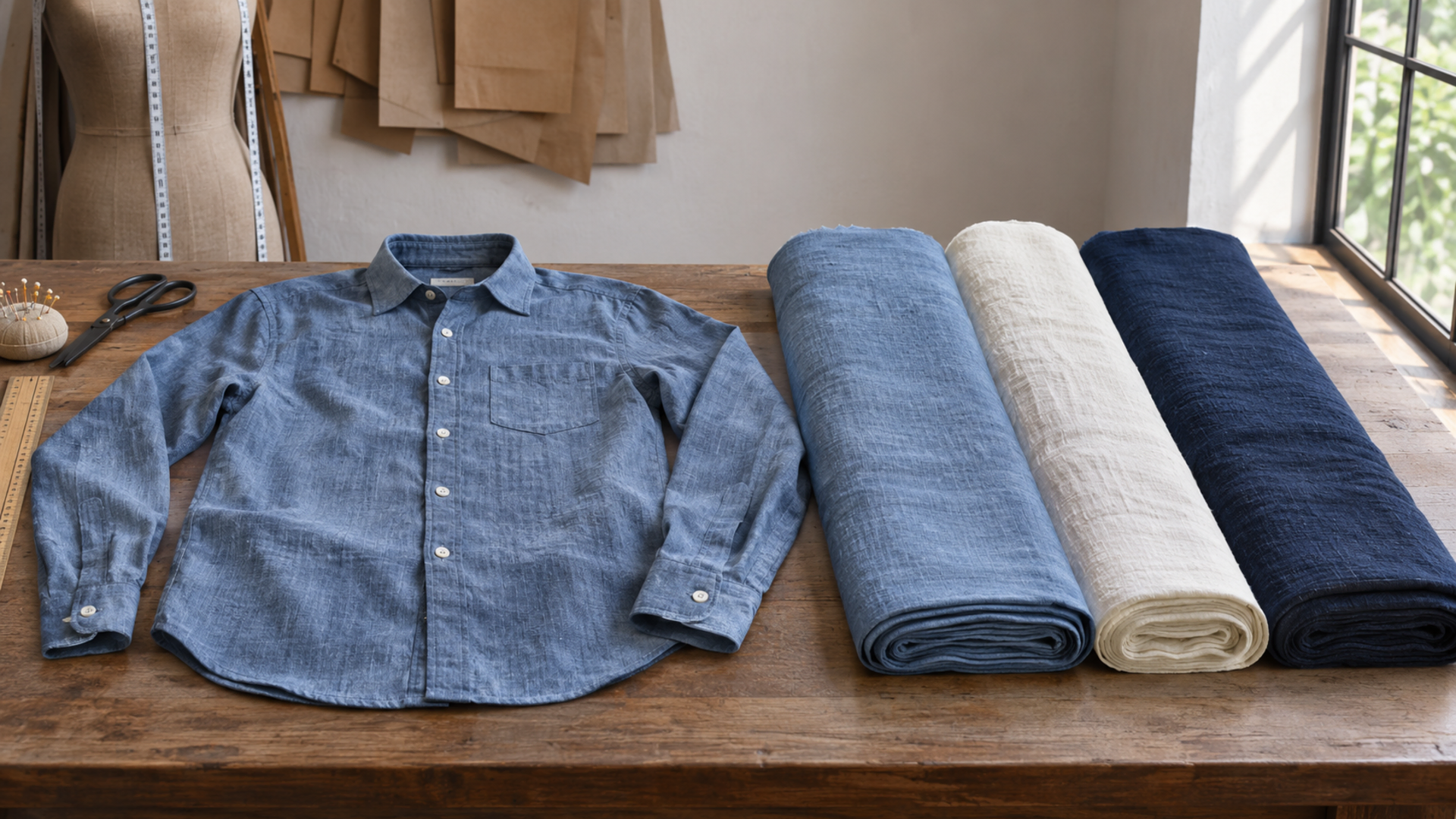
“I like this shirt. Can you go ahead with the others?” Before the scissors touch the next length, name the sample you accepted, the features it settles and the shirts you are releasing. A useful approval can say yes to two shirts and leave a third on hold. Give the workroom a dated instruction it can follow even if the person who fitted you is away the morning cutting begins.
Featured image generated with AI.
A trial can be a finished, wearable shirt, a partly made garment or a sample offered on particular terms. Find out what this maker is offering. Ask about the charge, who keeps the sample, whether it counts towards the order and which decisions can still change. A promise to adjust a finished item gives you different choices from an agreement to wait before cutting the rest.
Agree on the pause before you order
Ask the person taking the order to show you where the pause will be recorded. If a website takes payment for several shirts at once, ask how to hold individual lines. At a counter, look for a space on the order sheet for “hold for sample approval” beside the uncut lengths. A note attached only to the shirt being made might never reach the person allocating the remaining cloth.
Read the maker’s own terms for trials and remakes. For example, Proper Cloth describes how customers can request a remake through an individual order. Its procedure applies to an individual shirt already ordered. If you want later shirts held while you consider a first one, obtain a separate answer about when those shirts will enter production. A remake policy alone gives the cutter no instruction to wait. Proper Cloth’s remake procedure
Ask what happens to the reserved cloth during the pause. Can the shop hold all three lengths until you reply? Does the reservation expire? Is a deposit applied to the sample, the cloth or the whole order? Record the answer where you will see it before the deadline. If you bring your own length, agree who accepts customer-supplied cloth and how much the trial will consume before you allocate the balance.
Identify the sample you are actually accepting
Give the sample a reference as soon as it comes back from the workroom. An order number, sample letter, revision date and cloth code make a workable combination. Attach the tag in the way the maker prefers. Keep a photograph or copy of the same information yourself. “Blue fitting shirt” is manageable when there is one on the rail. It stops being manageable when a second blue shirt has a revised sleeve.
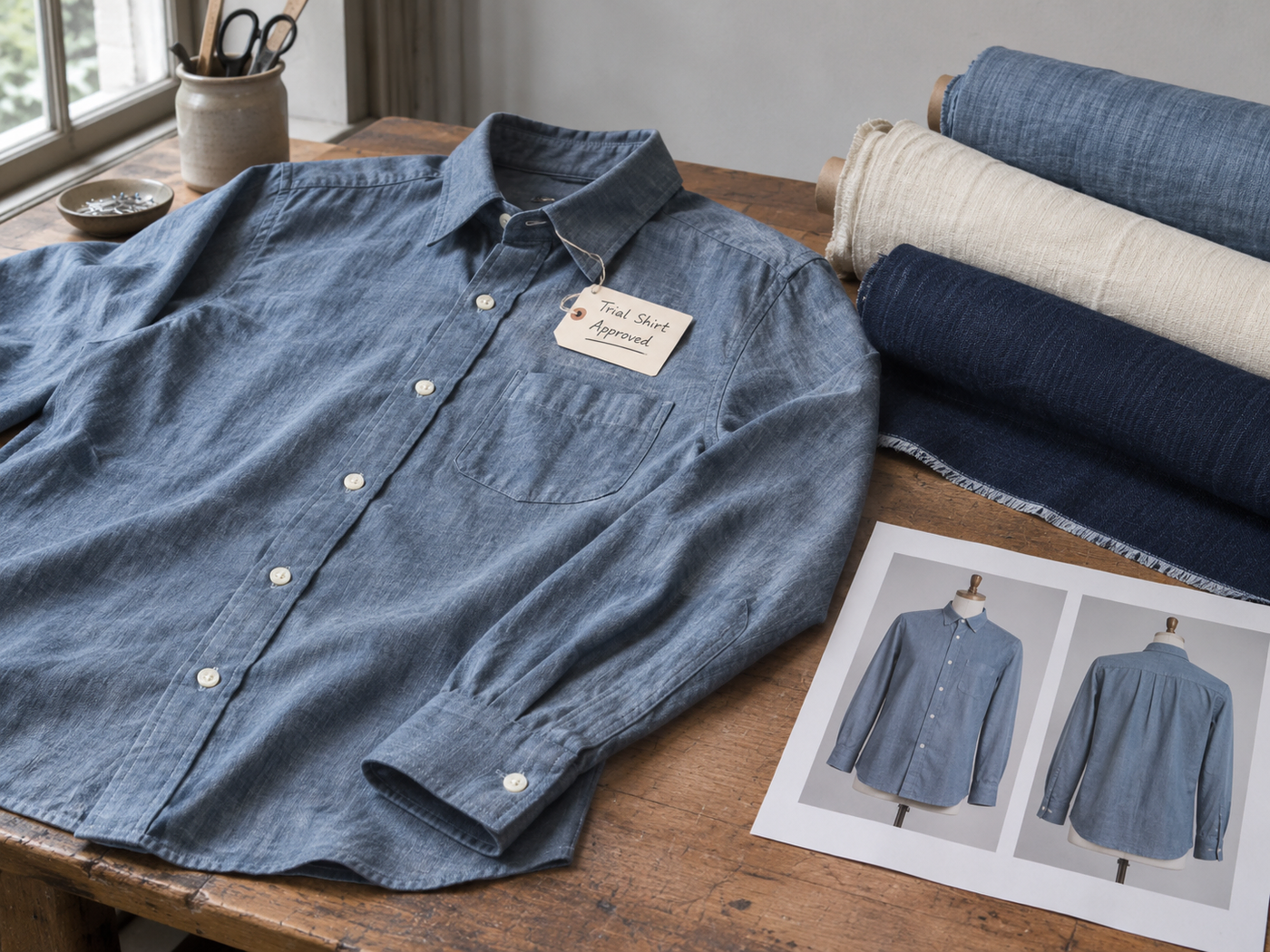
List what this sample was intended to settle. Perhaps that is the body shape when seated, the end of the cuff with the arms down and the roll of a particular collar worn open. Put on the shirt with the trousers and jacket you expect to use. Fasten it as you would on a working day. Spend enough time in the relevant positions to distinguish an initial impression from something you want repeated in every shirt.
Ask whether the maker expects the assessment before or after a particular preparation. If laundering is part of the agreed trial, follow the maker’s care instructions and note what happened. If the sample is on loan, ask before washing or altering it. Record its condition when approved. An untouched display shirt and a customer’s own washed trial can each be a good reference, provided everybody knows which one they are using.
Mark the order in three passes
First read the order against the sample without changing anything. Check cloth, front, collar, cuffs, pocket and size reference. Use the maker’s words, then add a visible identifier in your own. A front called B on the order sheet might be the one with a narrow stitched band. That second description is a quick way to catch an incorrect letter before it becomes a recurring feature.
Next identify any difference you have agreed since the sample was made. On the line beside “sleeve”, for example, write the actual change, side and unit in the maker’s terminology. Have the cutter confirm whether the revision needs another trial. An approved body with a sleeve alteration still outstanding is quite a different instruction from approval of the sample as a whole. Date a revised sheet and mark the earlier one superseded.
Finally decide which order lines can inherit which decisions. Make an individual row for each cloth and style combination, even where the quantities are small. A customer buying three shirts often thinks of them as a set. The cutter has three separate lengths and needs to know which pattern and which exceptions belong to each. Give each row an action and a quantity.
A three-shirt example with one exception
Imagine that a separate paid trial in blue poplin has been accepted. The outstanding order calls for one more blue poplin shirt, a second shirt in the same cloth and design, and a third in heavier indigo cloth with a softer collar. The customer wore the trial at a desk and through a commute. Its body, sleeve length and cuff have been approved without changes. The softer collar in indigo has never been made for this order.
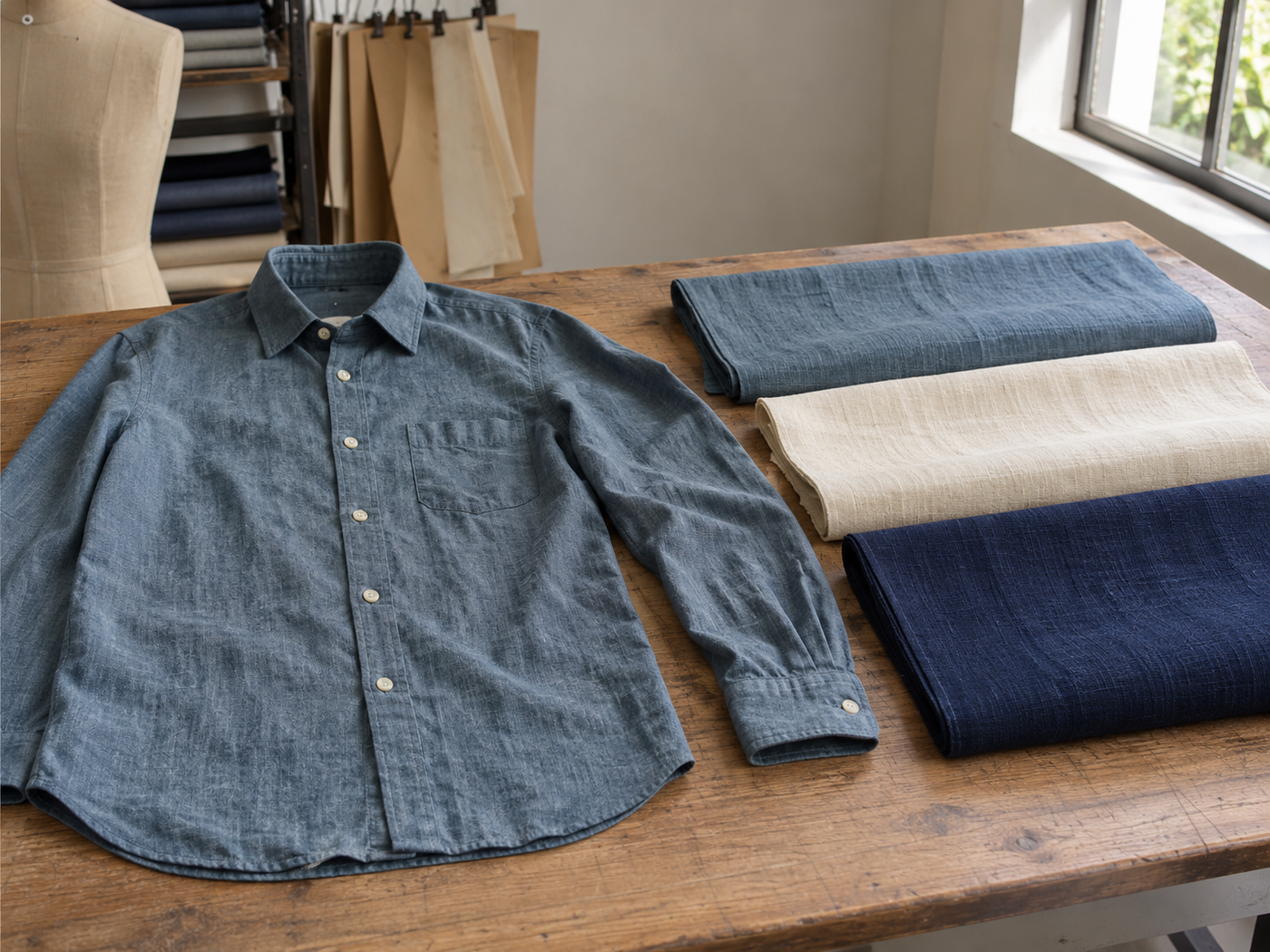
Place the blue cutting alongside the trial sleeve and check the code. Then lay the indigo cloth there. The colour difference is obvious. The more important question is whether the accepted decisions still apply. Ask which features the maker can repeat confidently and which require a new example. The maker might offer a collar on a short section of the new shirt front. Ask what that demonstration would settle and whether the body would still need to be tried.
For this imaginary order, a written release could authorise two blue shirts from trial B, with no changes to the accepted design. The indigo line would carry “quantity one reserved, zero authorised for cutting”. The next action beside that line would be “maker to show soft collar in indigo cloth”. A person reading just the third line should be able to tell that cloth remains uncut.
Choose a test proportionate to the difference
If the proposed change is very small, ask for the smallest useful sample. A changed button can often be judged against an offcut. An altered front opening may need to be seen fastened at chest height. A change in the way room is distributed around the waist calls for a shirt the wearer can sit in. Ask the workshop to explain the relationship between the new decision and the test it offers.
For shirts of the same colour made from a new delivery, check the maker’s code and ask whether it regards the new cloth as equivalent. If it proposes a substitute, identify it explicitly and ask who will approve it. When the uncertainty is mainly shade, review a fabric colour sample in the light where the shirts will be used. A shade approval should say exactly that. It does not resolve the behaviour of a new collar.
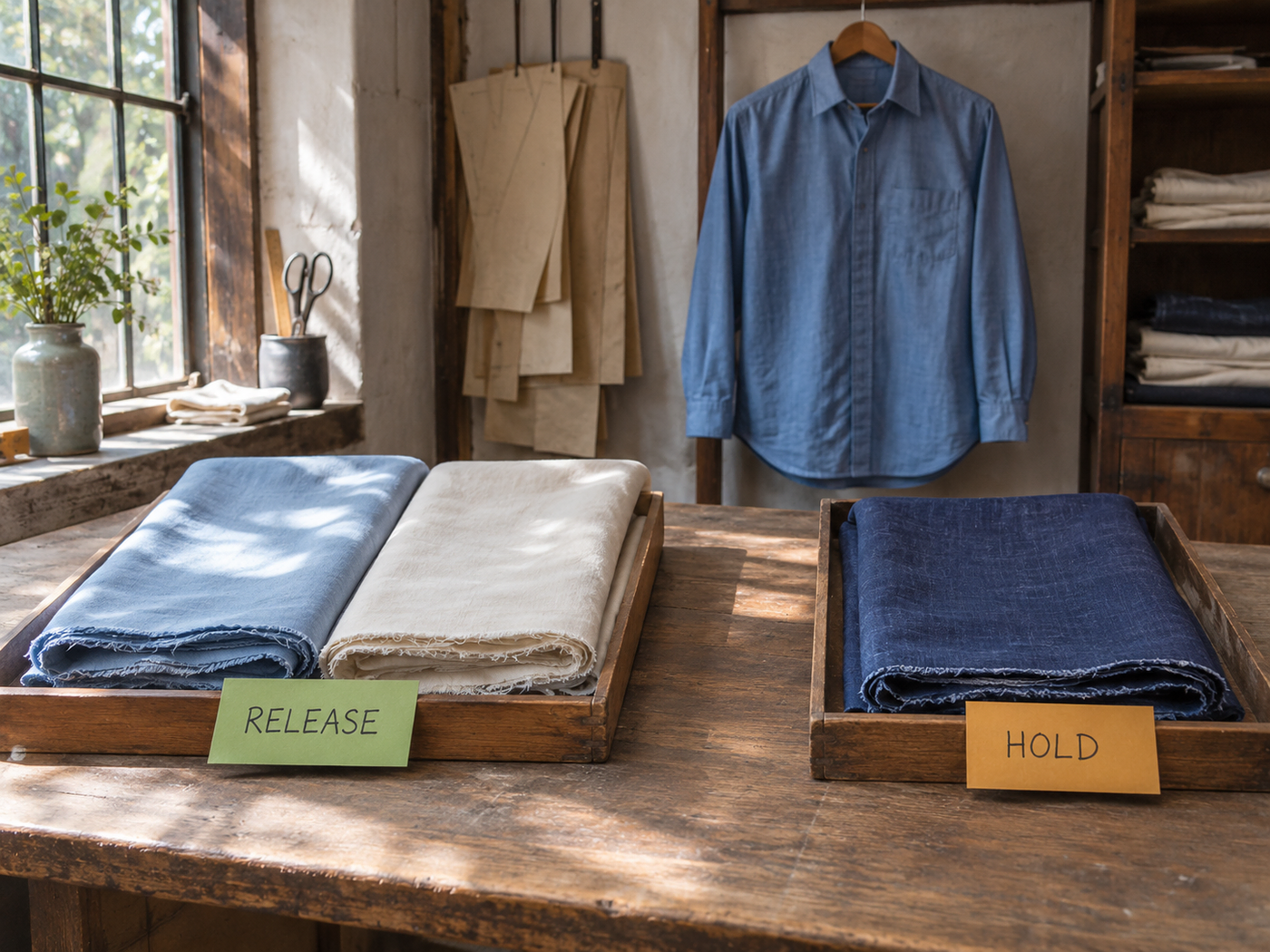
Hold back only the affected rows when it makes sense to do so. If all shirts share the same unresolved shoulder change, the whole batch depends on the answer. If a single shirt has an untested collar, ask whether the others can go ahead independently. Give the maker an opportunity to explain cutting or sourcing constraints before promising anyone a delivery date. Ask for revised timing separately for the released and held items.
Give the cutting room a usable release
- Name the accepted trial, revision and cloth. State who saw it, its condition and the date. If the maker keeps the physical shirt, agree how the reference will stay with it.
- For each order line give the cloth, style, quantity ordered and quantity released. List specific changes against the affected line. Record the next evidence needed for any hold.
- Ask the workroom to acknowledge the instruction and the quantities it has released. Keep one dated copy with the receipt. When a held line is later approved, issue a new dated instruction for that line.
After the first finished shirt from the released batch arrives, compare it to the approved reference before you retire the paperwork. If you intend to return to this workshop next year, keep the accepted pattern and style references with a description of what arrived. A batch release authorises work today. A repeat order months later needs a trail back to the version you still like.
“Release two blue poplin shirts against accepted trial B, as fitted and identified on the attached sheet. Please acknowledge the cloth code and quantity before cutting.”
“Keep the indigo shirt on hold. I will release that line separately after seeing the new collar on its own cloth and receiving the revised delivery estimate.”