
“Could you make me another one of these?” Put the shirt on the counter and give the maker a second thing to look up: the order that produced it. The useful answer to who keeps your pattern is a name, a reference and a version. Ask the workshop to identify all three before it starts a repeat. Keep its reply with your own description of the finished shirt.
Featured image generated with AI.
A customer’s name can lead to several shirts, and the most recent one might be the experiment you decided against. A receipt can get you to the right order without recording what happened at the last fitting. Start with the garment you would reach for tomorrow. The closer you can get the person taking the order to that particular shirt, the less either of you has to reconstruct from memory.
Trace the shirt back to a sale
Lay the shirt flat and look inside for an order number, initials or a sewn label. Copy what you see exactly, preserving spaces, letters and leading zeroes. Take a clear photograph for your own file. An ordinary size label helps identify the seller but might appear in hundreds of shirts. If the maker says a code identifies the cloth alone, move it to the cloth line of your record.
Now find the receipt, confirmation email or collection message. Record both the order date and the date you accepted the finished shirt. Try the email address you used at the time, particularly if a partner bought it as a gift. Give the workshop just enough identifying information for a search. Let the original customer introduce you if the shop needs their permission to discuss the order.
Suppose your receipt says “two white shirts”. Hold them together by the collar and look for a difference the order taker can check. Perhaps one cuff has a rounded corner and the other a straight edge. A small detail can connect a photograph to a line on an invoice. Describe it as an identifier even if you plan to choose a different cuff next time. For a difficult pair, compare the shapes of the cuff corners before you label your photographs.
Ask what the workshop can retrieve
A pattern is the set of shapes used for cutting. The maker might work from paper pieces, a digital draft, a size profile with adjustments or a combination. Ask, “When I quote this number, what can your cutter actually retrieve?” Follow the answer through to the person who will issue the cutting instructions. A shop that can see your invoice might need to ask a separate workroom about the draft.
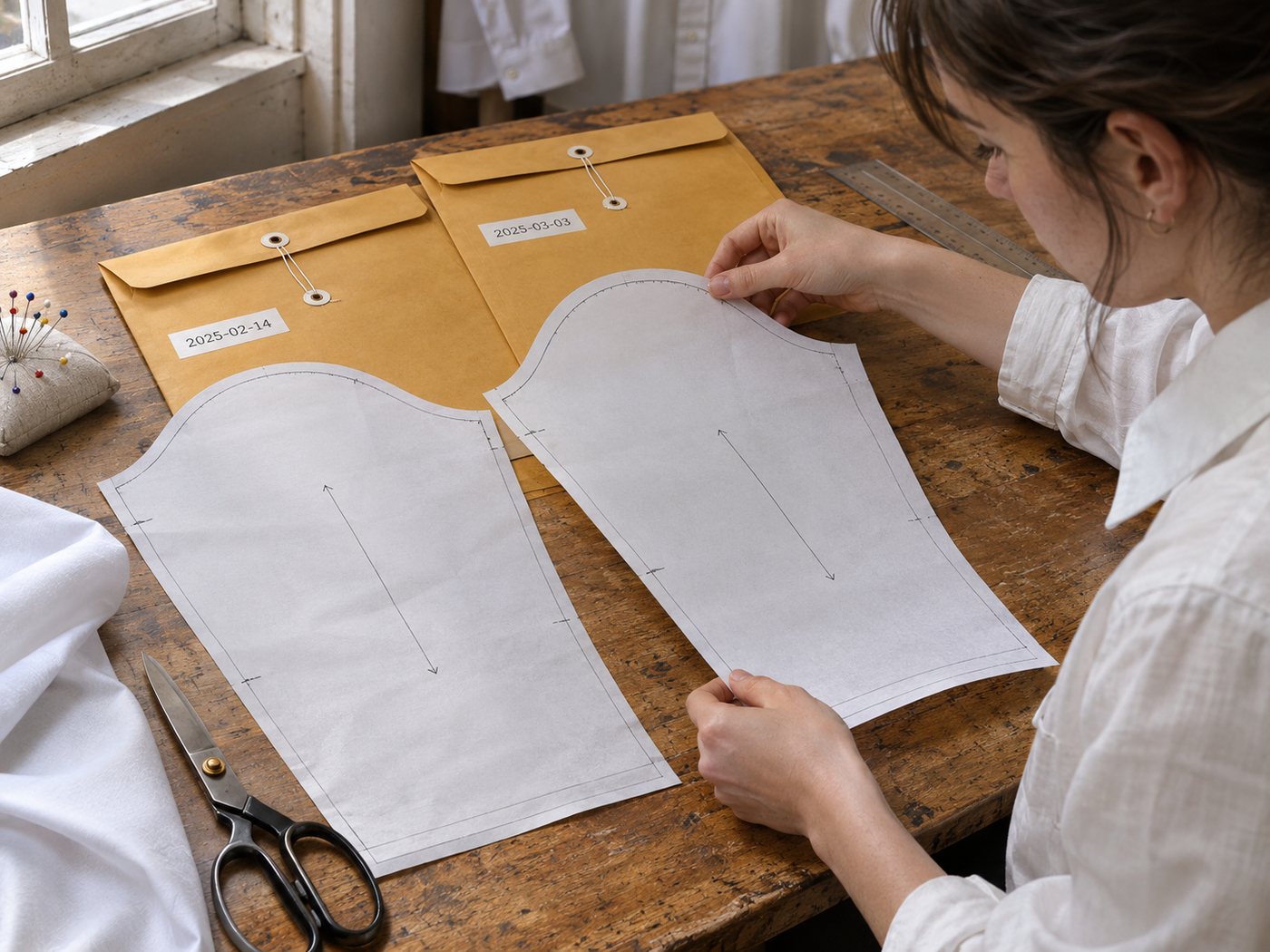
Ask how a new colleague would find it if the person who fitted you left. A useful reply sounds like “quote this order to our alterations desk and ask for the accepted sleeve revision”. Write down the desk as well as the individual’s name. If the shop keeps physical pieces, ask whether the reference is on the envelope or on the pieces themselves. If there is a digital file, ask which name or number identifies its accepted state.
Separate the shape from the choices added at ordering. Proper Cloth, for example, explains that it stores fit dimensions in a size profile and details such as pockets and collars in a separate style profile. A customer repeating an order through that service needs to pay attention to both. Another maker may keep the same information on one ticket. Ask for the route through the system you actually use. Proper Cloth’s account and ordering FAQ
Give each revision a date and a meaning
Imagine a customer orders a white shirt in February. The sleeves finish where the customer likes them. In June the same customer orders another white shirt with extra sleeve length for a particular jacket. The June shirt has a square cuff. In September the customer brings back the February shirt, which has a round cuff, and asks for two more. “My current pattern” could send both pieces of cloth to the wrong cutting line.
A short history makes the choice legible. Write “February, round cuff, first white shirt, sleeve length accepted at collection” and “June, square cuff, longer sleeve requested for second white shirt”. Ask the cutter to put their own references beside those lines. Now the instruction is to use the sleeve revision associated with February. The cutter can check whether June created a separate pattern or overwrote a setting on the same file.
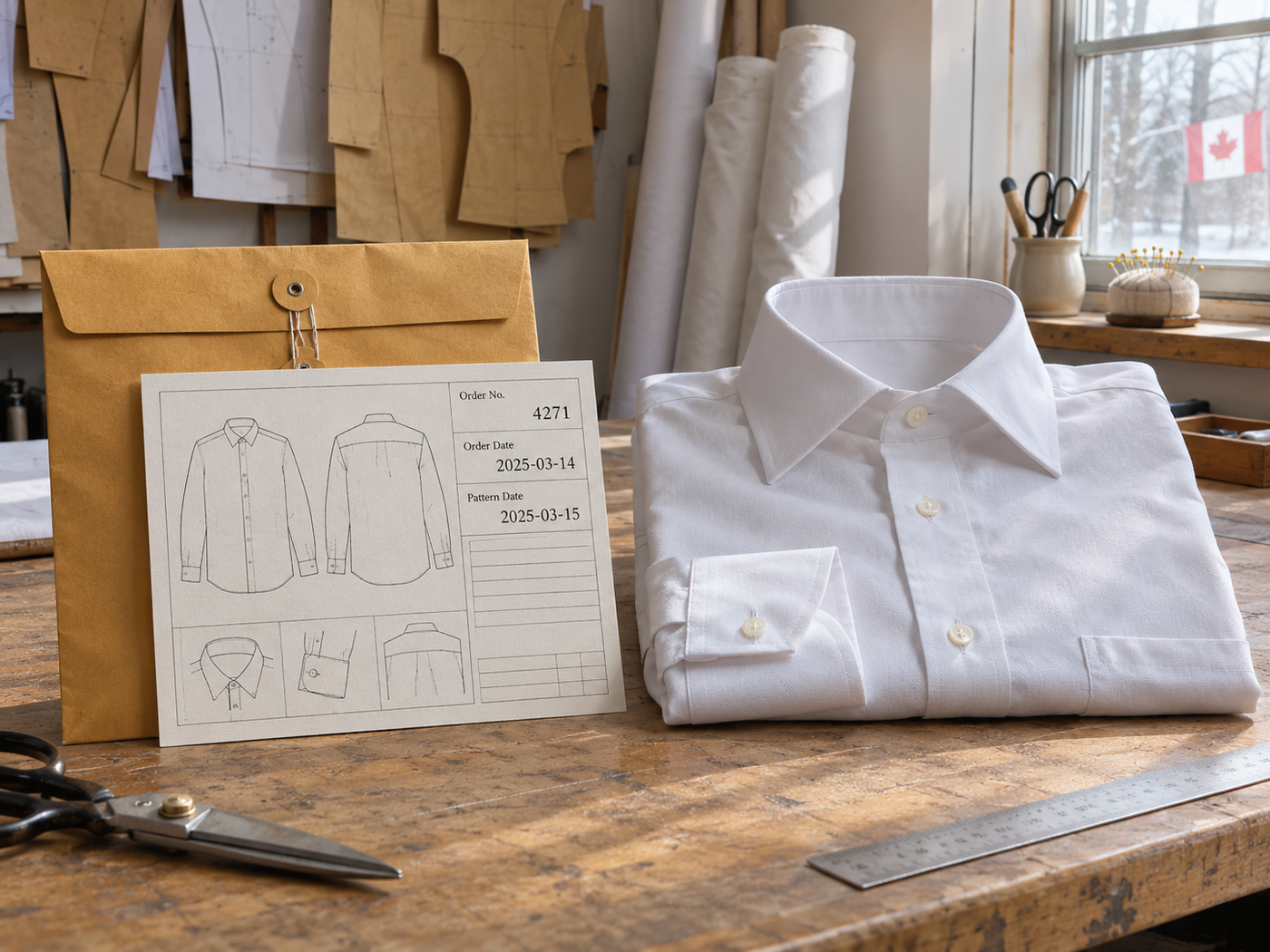
Take care with work done after collection. Suppose another tailor shortened just the left sleeve on the February shirt. The original workshop might have an impeccable record of a shirt you no longer own in that condition. Include the alteration, its side as worn and the date if you know it. Ask the maker to compare the garment with the retrieved record and identify the new baseline. Leave the amount blank if you cannot substantiate it.
Make a record that survives a change of shop
Give one page to each version you would willingly repeat. Start with the name you use at home, then add the workshop’s reference beside it. A name like “white shirt for blue blazer, round cuff” is easy to recognise while getting dressed. It is also a much better file name than “final”, particularly when there is a second final three months later.
- Identify the shirt with the shop, order date, order number and one visible distinguishing feature. Keep a view of the whole garment as well as a close view of the distinguishing feature.
- Record the accepted fit version and any style reference separately. Add the name of the person or desk that confirmed them and the date of that confirmation.
- List later work with the side, location and person who carried it out. Keep a change requested for the next shirt on a separate line until you have accepted the result.
- Note the cloth code if available. If the original cloth is gone, leave space for a cutting of the proposed substitute and the maker’s advice on what needs testing again.
Put a copy somewhere you control. Ask the shop what it is willing to share and in what form. A list of finished measurements, a copy of the order, a printable style sheet and a set of cutting pieces are different requests. Buying a shirt alone tells you little about the workshop’s arrangements for releasing its working material. Get the answer for this commission before making plans that depend on a transfer.
Decide how closely the next shirt must repeat it
Lay the two versions side by side and start with how you will wear the next one. If you want the February sleeve and the June cuff, you are combining decisions from different orders. Mark that explicitly. Ask whether the change in cuff affects where the finished sleeve will end. Let the maker translate the result you want into their own measurements, then ask them to read the combination back to you.
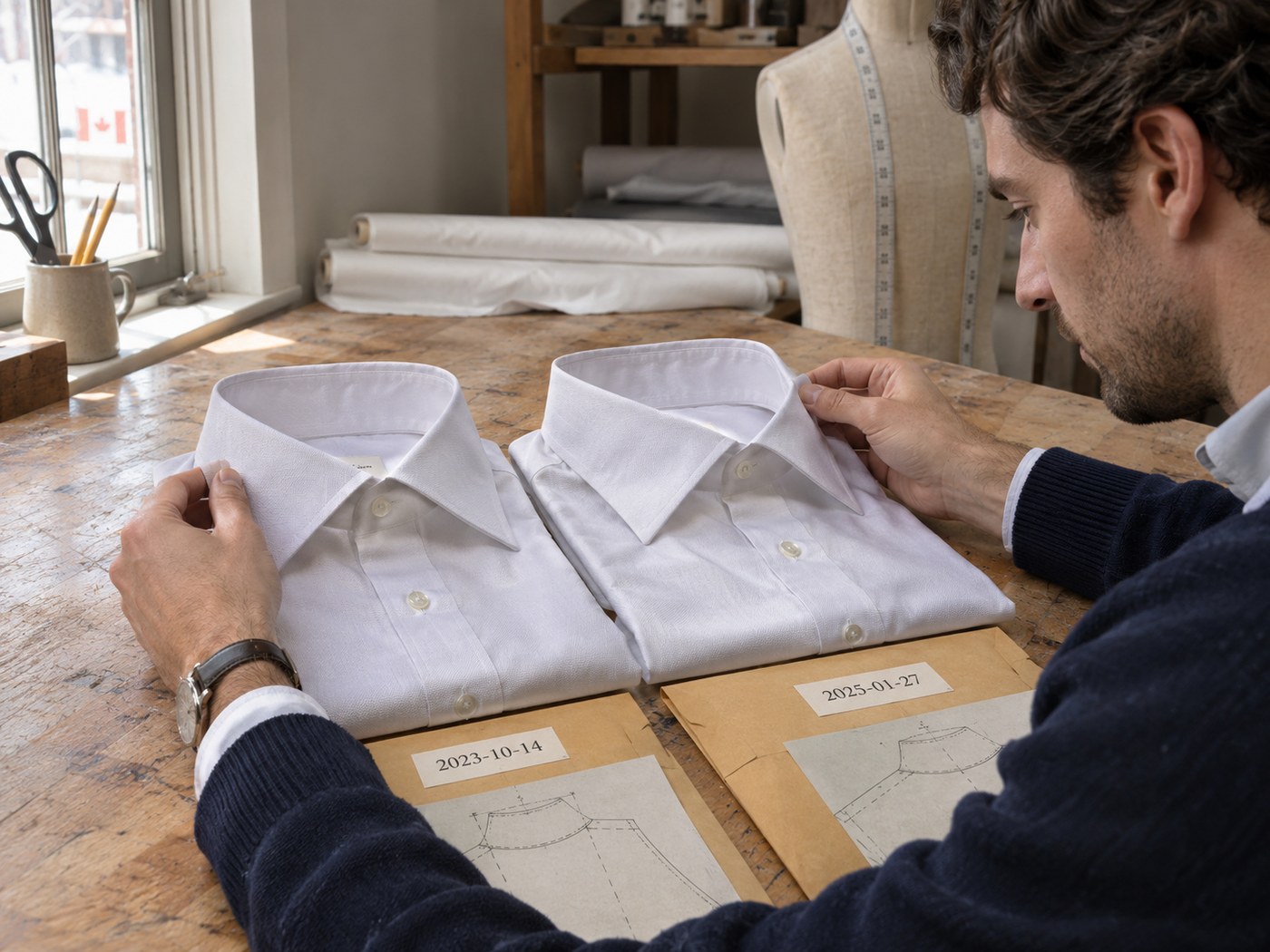
When the reference is a well-worn favourite, explain which quality you are trying to repeat. A softened collar, a particular amount of room when seated and a faded shade of blue ask three different things of a new shirt. Choose the one that matters enough to delay cutting if it is uncertain. If the new cloth changes the question or several shirts are involved, release the batch against one accepted trial.
If the shop cannot find the pattern, ask what it can reconstruct from the shirt and its surviving records. Request an estimate for retrieval, redrafting, a new fitting or sending a copy, with each service identified. A free search and a paid new draft can both make sense in the same job. Ask which fee you must authorise before work begins. If the shirt needs to travel, agree who receives it, how it will be identified and when you can collect it.
At a different counter, offer your card as a starting point. Tell the new maker how the old shop measured a sleeve, if you know. Show where a quoted measurement began and ended. A bare number gives a cutter very little to go on. Let the new shop assign its own reference, and cross-reference it to your old card after you have accepted the result. That keeps the trail intact without treating two workshops’ pattern systems as interchangeable.
A two-line request to send
“Please locate the February white shirt with the rounded cuff under my attached order reference. Confirm the accepted sleeve revision, the matching style record and the name of the desk that holds them.”
“For the repeat, use that February sleeve on both sides and the cuff shown on my marked photograph. Please tell me about any retrieval or new-draft charge and wait for my confirmation if either reference cannot be recovered.”