

Suppose you’re taping for the hotel manager who has to tell a guest that the room he booked is already occupied. You own a blue work shirt and a dark jacket. Read the casting note first. If it leaves the clothing up to you, try the line once in the plain shirt and once with the jacket over it. Keep the version in which you can see the manager decide how to break the news. A hotel badge adds very little to that moment.
Featured image generated with AI.
What did casting actually ask to see?
Open the audition email beside the sides, the pages of script you’ve been given to read. Find the job title, any wardrobe instruction and the requested frame. They answer different questions. “Hotel manager” tells you whose shift this is. “White collared shirt” gives you an item to find. “Chest up” tells you which part of it the casting team will see. A detail in the script about the manager’s polished shoes can help you imagine the walk to the desk even if the shoes never enter the shot.
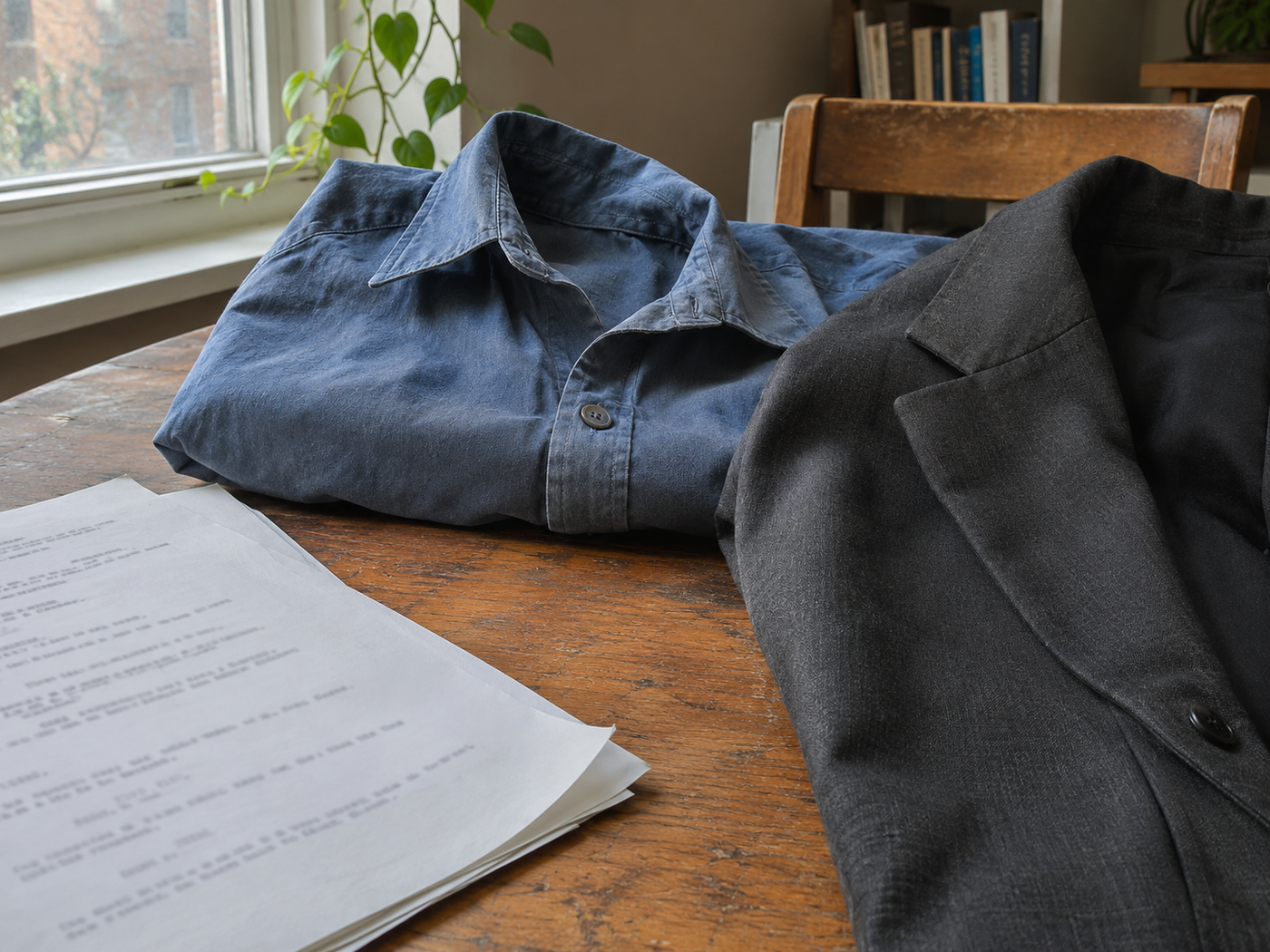
If the note asks for a white shirt and you have one, start both rehearsal takes in it. If it names a specific uniform you can’t supply, put one question to the casting contact, through your representative if you have one. “Would a plain white collared shirt work for this tape?” Send that question while you have time to use the reply. A badge borrowed from someone’s workplace answers a question casting hasn’t asked.
Casting director Krista Husar describes using a small wardrobe detail to suggest a character in SAG-AFTRA’s account of its self-tape workshops. For this scene, think about when the guest first sees you. A shirt open at the neck might suit a manager called out from the back office. The jacket might suit someone who has been greeting guests all evening. Pick the moment that makes sense with the lines on the page. For a screen example, see how costume distinguishes Smoke from Stack in Sinners.
Give the same line two readings
Set up the requested frame and choose a line with someone on the receiving end. For a practice version, try “Let me see what I can do.” Ask your reader to give you the same cue both times. Leave the phone, chair and light where they are. You want to be able to tell what putting on the jacket changed.
- Shirt alone. Take a breath, listen to the guest and give your answer. Leave the camera running a beat after the line. That last look might be the first time we see whether the manager has a room in mind.
- Jacket on. Slip it on over the same shirt. Keep your mark and the same thought for the guest. Let your hands move as they did before. If a lapel brushes your mic or you tug the front down as you sit, you’ll hear or see it on playback.
Watch both clips once with the sound on. At what point do you believe the guest would hand this person the problem? Now mute them and look at the instant before you speak. In one take you might lean towards the guest while the other has you looking down to settle the jacket on your knees. Your reader can help here. Ask “When did you think I’d decided to help?” A specific answer tells you more than a vote for the smarter outfit.
Keep the take that leaves you free to act
Suppose the jacket gives the manager a convincing presence in the opening frame, but every time the guest interrupts, you pull at a sleeve. Try that interruption once more. If it keeps taking you out of the exchange, wear the shirt. If both readings feel equally alive, choose the one cue that makes this particular shift easiest to picture. Then record the requested scene with your attention back on the guest.
Save a still from the take you chose. If casting asks you to pick up the scene tomorrow, a quick wardrobe record for matching a later take can show which collar button was open and whether the jacket was fastened. For today’s submission, follow the requested number of takes. The two short readings have already done their job once you know what to wear.

One thought on “How to Suggest a Uniformed Role in a Self-Tape”